Category: Uncategorized

  • Understanding The US Electoral College #rwanda #RwOT

    BORN OF COMPROMISE and enshrined in the U.S. Constitution, the Electoral College isn't a place. It's a temporary voting body that elects the president of the United States. When voters select their presidential and vice-presidential candidates on Election Day, they're actually choosing the members of this body who will cast votes on their behalf in the days and weeks after the election.

    For the past 233 years, this confusing and contentious institution has split opinions and overseen some truly rocky presidential elections. It has elected five presidents who didn't win a majority of American votes and resulted in one tie. And though most electors vote for their pledged candidates, some have historically gone back on their promises.

    Every four years, debate revives over the efficacy, equality, and even necessity of this electoral system. Here's what you need to know about how it came about, how it works, and the proposals for Electoral College reform.

    Electoral College and the US Constitution

    The Electoral College is the result of a series of compromises struck during the grueling Constitutional Convention of 1787. Delegates quibbled over, and discarded, a variety of ways to elect a president. Some believed citizens should vote directly while others argued that Congress should decide. Still others insisted this would give the national legislative body too much power and that the decision should lie with the states. But that was contentious, too, because delegates couldn't agree on what role, if any, state legislators and governors should play in the process.

    Giving states electoral power also raised the question of how less populous states would be represented. This was a sticking point among Southern slaveholding states, which lacked the population of their northern neighbors. Delegates from those states insisted that their enslaved residents, who were not considered citizens and would not be allowed to vote, be counted for the purpose of allocating electoral votes.

    Finally, the framers hit on a solution that balanced all of these factors. Article II of the Constitution holds that each state should appoint electors equal to the number of its U.S. senators and representatives. While the size of the House of Representatives would be based on population—as determined by the U.S. Census—each state received two senators to give a small bump in power to less populous states.

    The question of how to count enslaved people resulted in the notorious Three-Fifths Compromise, which determined that three out of every five slaves would be counted as persons for congressional representation, taxation, and the Electoral College.

    One point that the Founding Fathers didn't consider during their deliberations was how to distinguish between ballots for the president and vice president. This flaw would become obvious in the nation's fourth election in 1800, which resulted in a tie between presidential candidate Thomas Jefferson and his running mate Aaron Burr. The contest was thrown to the U.S. House of Representatives, which ultimately selected Jefferson after deadlocking 35 times. In 1804, the 12th Amendment was passed to create separate votes for presidents and vice presidents in the Electoral College.

    Then there was the matter of who was qualified to be an elector. The Constitution originally provided only that electors couldn't be members of Congress or federal employees and left it up to the states to decide who they would choose and how.

    In 1868, however, the 14th Amendment added a requirement that electors can't have participated in a rebellion against the United States or have aided its enemies. More notably, it also negated the Three-Fifths Compromise by conferring citizenship on formerly enslaved people at the end of the Civil War, ensuring that each individual would be counted.

    How states allocate electoral votes

    States' approaches to their electors varied from the start. At first, Connecticut, South Carolina, and Georgia's state legislatures appointed electors directly, while other states let citizens decide. But as political factions grew, states' procedures changed and slowly shifted this role to political parties. Now, political parties select a slate of people in each state who will stand as electors for the party's candidate.

    In the 2020 election, there will be 538 electors. To win the election, a candidate must win a majority—270 electoral votes.

    State rules vary on how to allocate electoral votes. In the winner-take-all system, which is in effect in 48 states and the District of Columbia, all of the state's electoral votes are allocated to the slate of electors chosen by the political party of the candidate who won the state's popular vote.

    Maine and Nebraska assign electoral votes by congressional district, a system that has resulted in one split election in each state. In 2008, Democrat Barack Obama won the electoral vote in the Nebraska congressional district that covers Omaha and its suburbs, while Republican John McCain won the rest of the state. In 2016, Republican Donald Trump won the electoral vote in the less populous district that covers most of Maine, and Democrat Hillary Clinton won the other district and the state's popular vote.

    In 2019, Maine became the only state to adopt a ranked-choice system in which voters rank candidates in order of preference. If no candidate receives a majority, the votes are then tabulated in rounds, and the lowest-ranked candidates are eliminated until only two are left. In the final round, the candidate with 50 percent or more of the vote wins.

    Counting the votes

    Though a candidate usually declares victory or concedes on Election Night, the returns reported by the media immediately after the election are only preliminary. The official count comes later, when the electors cast their official votes.

    After Election Day, which takes place on the first Tuesday after the first Monday in November, states use the remainder of November and December to gather, certify, and send their electors' formal votes for president and vice president to the National Archives and Records Administration, which administers the Electoral College.

    The votes are counted in a joint session of Congress on January 6. The sitting vice president—who is also president of the Senate—presides over the session, opening the votes, reading them aloud, and passing them to two 'tellers' from each chamber who count them. If one candidate receives 270 or more electoral votes, the vice president announces the results—including, sometimes, their own win or loss.

    Members of Congress can object to individual electors' returns or states' overall returns. If a written objection is signed by at least one senator and one member of the House of Representatives, it bumps the session to a recess. The two houses then debate the objections and vote on whether to accept or reject them. Both houses must agree to reject the returns to exclude them from the final tally.


    by ERIN BLAKEMORE

    Source : https://taarifa.rw/understanding-the-us-electoral-college/

  • Kirehe Farmers Export 2 Tonnes Of Dried Pineapples To France Monthly #rwanda #RwOT

    A little known cooperative of farmers in rural Kirehe district have defied odds and are harvesting good money from exporting to France dried organic pineapples.

    Tuzamurane cooperative processes 2 tonnes of dried pineapples from 40 tonnes of fresh pineapples every month at their facility in rural Gahara sector.

    The cooperative has 133 members cultivating organic pineapple on more than 150 hectares.

    Dried fruit is fruit from which the majority of the original water content has been removed. This is done either naturally, through sun drying, or through the use of specialised dryers or dehydrators.

    Tuzamurane cooperative has been processing pineapples since 2003 and began exporting them in 2005, according to the cooperative management in previous interviews; 'Our aim is to export 36 tonnes per year, meaning three tones monthly, by 2020,' the cooperative previously said.

    Since 2013, the total European imports of edible nuts and dried fruits have grown annually by 9% in value, reaching € 11.3 billion in 2017. Over the same period, imports have grown annually by 3% in quantity, reaching 2.9 million tonnes and Tuzamurane cooperative is a major contributor to this lot.

    According to French online supermarket Amazon.fr, a kilogram of Organic Dried Pineapple costs at least 32,20 € including VAT.

    France imports from Rwanda; leguminous vegetables, shelled or unshelled, fresh or chilled. Dates, figs, pineapples, avocados, guavas, mangoes and mangosteens, fresh or dried at 4.9% of total quantities imported from Rwanda.

    Rwanda's horticulture sector has been steadily growing. The country's fresh products are branded under the 'RWANDAFRESH Brand' and processed products are certified for the current world quality industrial standards.

    'Koperative' Tuzamurane

    According to the National Agricultural Export Development Board (NAEB) statistical report (2018-2019) on performance of agri-exports sector, a total volume of 37,343 tons of horticultural produce were exported from Rwanda during the 2018-2019 fiscal year as compared to 30,097 tons of horticultural produce exported during the 2017-2018 fiscal year.

    Growth in horticultural export volumes from Rwanda was at 24%, which transformed to 16% increase in export revenues at US$ 27,174,785 in 2018-2019 compared to US$ 23,439,874 earned from horticultural exports during 2017-2018 financial year.

    Rwanda Exported 305.6MT Of Fresh Products Last Week

    Source : https://taarifa.rw/kirehe-farmers-export-2-tonnes-of-dried-pineapples-to-france-monthly/

  • Udushya turi mu matora ya Amerika akomeje gutera amatsiko isi yose ibahanze amaso #rwanda #RwOT

    Umukandida w'abademokarate Joe Biden yavuze ko arimo gutsinda muri leta zihagije kuburyo yizeye gutsindira kuba perezida w'Amerika, nubwo hakiri ibyavuye mu matora by'ingenzi bitaratangazwa.

    Mbere yuko atsinda muri leta ya Michigan, Bwana Biden yagize ati:

    'Igihe ibarura ry'amajwi riza kuba rirangiye, twizeye ko tuza gutsinda'.

    Itsinda rishinzwe kwamamaza Perezida Donald Trump ryatanze ibirego mu nkiko muri leta za Pennsylvania, Wisconsin, Georgia na Michigan risaba ko kubarura amajwi bihagarara kubera ibitagenze neza.

    Itsinda ryamamaza Biden ryavuze ko ibyakozwe na Bwana Trump 'bibabaje'.

    Umutegetsi wo hejuru mu kanama k'amatora muri Michigan yavuze ko icyo kirego 'nta gaciro gifite'.

    Perezida Trump yavuze ko azanaregera urukiko rw'ikirenga kubera ko habaye uburiganya, atatangiye gihamya.

    Indorerezi mpuzamahanga z'amatora zavuze ko nta gihamya ihari yuko habaye uburiganya mu matora.

    Muri rusange, igihugu kiratekanye, ariko habaye ubushyamirane mu mujyi wa Detroit muri Michigan, ubwo abashyigikiye amashyaka — abarepubulikani n'abademokarate — bangirwaga kwinjira mu cyumba kibarurirwamo amajwi.

    Source : https://impanuro.rw/2020/11/05/udushya-turi-mu-matora-ya-amerika-akomeje-gutera-amatsiko-isi-yose-ibahanze-amaso/

  • RRA Collects Rwf371.5B In First Quarter #rwanda #RwOT

    Rwanda Revenue Authority (RRA) registred Rwf371.5 billion in taxes in the first quarter of the 2020/2021 fiscal year, with an increase of Rwf20.3 billion above its 351.2 billion projection.

    The taxman registered the mark thanks to increased collection of Value Added Tax (VAT) according to Commissioner General Pascal Bizimana Ruganintwali, who made the revelation on Wednesday during the launch of the taxpayer appreciation month at Serena Hotel held under the theme 'support business for economic resilience'.

    He said that the increase in VAT collection was due to high compliance levels experienced during the past months, despite hardships to busineses amid the #COVID-19 pandemic.

    He also noted that RRA has highted public awareness and strictness on defaulting.

    In FY 2019/20, RRA will continue to focus on optimization of revenue collection from the
    current levels to enable the government meet its economic and social obligations.

    For the financial year 2019/20, RRA revenue target for the national treasury has been set at
    Rwf 1,579.0 billion of which Rwf 1,559.0 billion are expected to come from central
    government taxes and Rwf 20.0 billion from non-tax revenues collected by RRA on services.

    The numbers have not yet been revised.

    RRA has to collect Rwf 67.3 billion of local government taxes and fees on behalf
    of all districts of which Rwf 33.4 billion will be collected from local government taxes, while
    Rwf 33.9 billion are expected to come from local government fees.

    Revenue projections for FY 2019/20 are underpinned by several on-going as well as new
    activities to be implemented by RRA according to its new four strategic outcomes mentioned
    above which are: improved customer service, enhanced tax compliance, improved employee
    engagement and development and strengthened organizational capacity.

    Source : https://taarifa.rw/rra-collects-rwf371-5b-in-first-quarter/

  • COVID-19: Major Italian Cities Placed Under Lockdown #rwanda #RwOT

    Four Italian regions will become coronavirus 'red zones' on Friday, Italian Prime Minister Giuseppe Conte announced on Wednesday.

    The regions of Calabria, Lombardy, Piedmont and Valle d'Aosta will be placed under the country's harshest restrictive measures in its new 'traffic light' system to tackle the spread of coronavirus.

    The region of Puglia and the island of Sicily will become 'orange zones,' while the rest of the country becomes 'yellow zones' (the lowest-risk zone).

    'Yellow zones' are subject to new national measures that include a stay-at-home order from 10pm to 5am local time. In these zones, public transport can only operate at 50% capacity, museums and exhibition centers must close, and masks must be used in school by all students over the age of six. Restaurants and bars can remain open until 6pm, after which they can only provide take away or delivery services.

    In 'orange zones' people will also be banned from leaving their town and their region — except for work or health reasons — and bars and restaurants will only be able to do delivery and take-away service.

    In the 'red zones,' Conte said people are not allowed to leave their houses except for work or health reasons. All the above national and orange rules apply, in addition to all non-essential shops being closed.

    The new rules will go into effect on November 6 and will last until December 3.

    'It's not a discretionary decision,' Conte said referring to the color assigned to the regions. The three different levels of risk across the country are based on the virus transmission rate, the number of available intensive care beds and the testing capacity. They will be assessed every 14 days.

    'If the risk lowers, less restrictive measures will be applied,' Conte said. 'As we all wish,' he added.

    There could be some exceptions inside the 'red zones' for specific areas that are less affected by the pandemic.

    'To freeze the surge of the contagion,' Conte said, 'we have no alternatives; we must face these restrictions.'

    'We understand the discomfort, the frustration, the psychological suffering, but we have to resist,' he added.

    Source : https://taarifa.rw/covid-19-major-italian-cities-placed-under-lockdown/

  • RDC: Igitero cya FDLR kiravugwaho kwica abantu Babiri barimo umuyobozi w'ikigo cy'ishuri #rwanda #RwOT

    Mu ijoro ryo kuwa Mbere rishyira kuwa Kabiri, itariki 03 Ugushyingo 2020, inyeshyamba zo mu mutwe wa FDLR ziravugwaho kwica abantu babiri, barimo umuyobozi w'ikigo cy'ishuri giherereye muri gurupoma ya Tongo, yo muri Teritwari ya Rutshuru, mu Ntara ya Kivu y'Amajyaruguru.

    'Bishe abantu babiri. Umuyobozi w'ishuri n'ushinzwe umutungo bishwe n'Aba-FDLR. Turimo kwibaza impamvu ubuzima busigaye bugoye mu karere kacu ka Rutshuru. Turasaba guverinoma kuzana amahoro muri Teritwari ya Rutshuru, ' ibi byatangajwe na Patrick Mavuno, impirimbanyi y'uburenganzira bwa muntu muri iyi teritwari.

    Iyi nkuru dukesha urubuga 7SUR7.CD ikomeza ivuga ko ubwicanyi bukomeje gufata intera mu burasirazuba bwa Congo.

    Inyeshyamba za ADF bivugwa ko zikomeje kuba inyeshyamba zidafite impamvu, ni zimwe mu zikomeje kwica, gusahura no gutera ubwoba Abanyekongo mu gihe umugambi watangijwe na Perezida Tshisekedi mu Ukwakira wo kurandura imitwe yose yitwaje ibirwanisho ukomeje kudatanga umusaruro.

    Source : https://impanuro.rw/2020/11/05/rdc-igitero-cya-fdlr-kiravugwaho-kwica-abantu-babiri-barimo-umuyobozi-wikigo-cyishuri/

  • FIFA Secretary General Inducted Into International Women's Forum Hall Of Fame #rwanda #RwOT

    FIFA Secretary General Fatma Samoura has been inducted into the International Women's Forum (IWF) Hall of FAME as recognition for her transformative contributions to society.

    Fatma Samoura, who worked on United Nations projects for 21-years before becoming the first-ever African, and woman to hold the role of Secretary General at FIFA in its 116-year history, was joined by fellow Hall of Fame honourees Mary Barra, Chairman and CEO of General Motors and Ginni Rometty, Executive Chairman of IBM, at the online 2020 IWF Hall of Fame Awards Gala.

    The gala was held online this year due to the COVID-19 pandemic and featured interviews with each of the three inductees about the paths they took to lead them to their current roles, the advice they have for young women and the causes that motive them in their daily work.

    The FIFA Secretary General's interview touched on her 21-year career working on United Nations projects, her work at FIFA under the leadership of President Gianni Infantino, her six-month mission as FIFA General Delegate for Africa to assist CAF on its reform journey, her zero tolerance for racism and racist behavior and her advice for women.

    In a video interview with FIFA's first-ever Chief Women's Football Officer Sarai Bareman, Fatma Samoura said: 'In my 21 years as a development and humanitarian actor I met people from different backgrounds, whether religious, ethnic or also based on gender and I could see how they were reacting in the face of difficult and stressful situations… so this wealth of experience I brought in definitely to FIFA where, as I said, the human being is a key aspect of everything we do. Whether you are a coach, a football player or a fan, you deal with human beings. The core values I brought along with my 21 years at the UN are respect of diversity, fighting discrimination, fighting for equal opportunity and a world that is more just and fair to everybody.'

    In joining the IWF Hall of Fame the FIFA Secretary General joins women who were inducted for their work on tackling urgent issues the world is facing including: Maya Angelou, American poet and author; Phumzile Mlambo-Ngcuka, United Nations Under-Secretary-General; Rosa Parks, mother of the American civil rights movement; Ellen Johnson Sirleaf, President of Liberia; Nawal El Moutawakel, first Moroccan and first African Muslim woman to win Olympic gold; Ella Fitzgerald, American jazz artist; Ruth Bader Ginsburg, US Supreme Court Justice; Louise Arbour, Chief Prosecutor, International Criminal Tribunals in the Hague; Hillary Rodham Clinton, former US First Lady, US Senator, Secretary of State; Mary Robinson, President of Ireland; Wilma Mankiller, Chief of the Cherokee nation; Audrey Hepburn, international film star and Shirley Temple black child star and US Diplomat.

    Referring to advice for women Fatma Samoura said: 'Ladies you have to remember this, if you have been trusted enough to be given a position it's because you have the skills and qualifications necessary to do the job. Look to your sisters for support and count on them.'

    The IWF was founded in the US by Elinor 'Elly' Guggenheimer — chair of the New York City Planning Commission, in 1974.

    Its aim is to bring together women of diverse accomplishments and provide them with a forum for the exchange of ideas and experiences, as well as advancing women's leadership globally and locally. It has over 7,000 members worldwide.

    Source : https://taarifa.rw/fifa-secretary-general-inducted-into-international-womens-forum-hall-of-fame/

  • Mexance yashyize hanze indirimbo ikebura abibwira ko barusha abandi amahirwe #Rwanda #RwOT via @kigalitoday #rwanda #RwOT

    Mexance mu ndirimbo ye Niyibgena, asaba abantu kwiyoroshya kuko byose ari Imana ibigena
    Mexance mu ndirimbo ye Niyibgena, asaba abantu kwiyoroshya kuko byose ari Imana ibigena

    Mexance ngo ntabwo yaririmbye ubuzima bwe bwite, ahubwo yaririmbye ubuzima abantu babamo umunsi ku munsi aho usanga umwe avukira ahantu heza undi akavukira mu bakene rimwe na rimwe agasazana iryo pfumwe. Ngo hari n’abagera aho bakagira ubuzima bwiza bakibagirwa ibihe bibi baciyemo.

    Yagize ati “Birababaza kumva umuntu wibwira ko ubuzima bwe yabuharaniye kuko yavutse heza, ugasanga undi ahorana agahinda kuko yavutse nabi, buriya byose ni Imana ibigena. Bibabaza kurushaho iyo wavutse nabi wakira ukibagirwa aho wavuye”.

    Mexance yumva ko indirimbo zose zikwiye kuba zitanga ubutumwa bwigisha abantu aho kubayobya akaba ari na wo murongo yihaye. Bituma hari abahanzi ajya aha indirimbo yahimbye kugira ngo batambutse ubwo butumwa.

    Yagize ati “Habura ubushobozi ngo dusohore indirimbo zacu nkirinda ko indirimbo yasohoka uko ntayishaka, mfite indirimbo nyinshi hari benshi njya mpa indirimbo zanjye kandi bazibyaza umusaruro. Ni byiza ko duhanga ibifitiye sosiyete akamaro”.

    Mexance ni umwe mu bahanzi bazwiho gususurutsa imbaga mu birori bitandukanye, akaba umwe mu banyura abajya bagenda mu mahoteli atandukanye. Mexance azwi muri Gakondo icurangwamo na ba Masamba Intore.

    Reba indirimbo Niyibigena ya Mexance

    source https://www.kigalitoday.com/imyidagaduro/muzika/article/mexance-yashyize-hanze-indirimbo-ikebura-abibwira-ko-barusha-abandi-amahirwe

  • Muhanga: Abadafite ubushobozi bwo kuzirika ibisenge by’inzu bazafashwa #Rwanda #RwOT via @kigalitoday #rwanda #RwOT

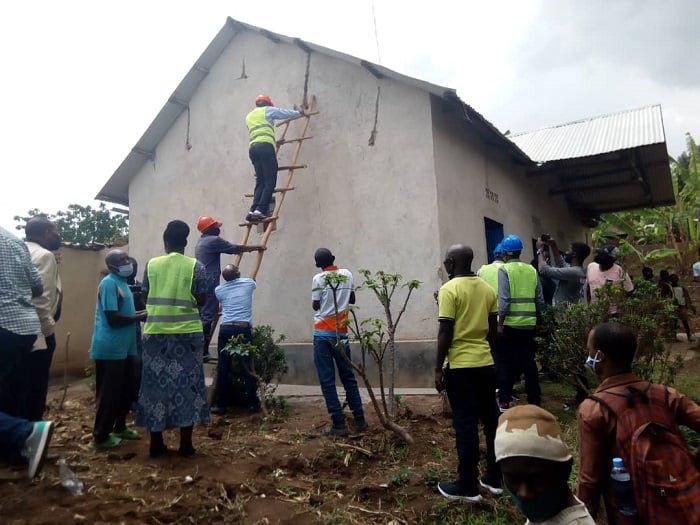
    Inzu ya Uwimana yari iherutse kuguruka n
    Inzu ya Uwimana yari iherutse kuguruka n’ubundi ntiyari iziritse neza

    Mu kwezi kwa Gicurasi 2020 imvura idasanzwe yateye ibiza mu Karere kose ka Muhanga maze imiryango myinshi irasenyerwa kandi bitwara n’ubuzima bw’abantu 19 benshi bagwiriwe n’inzu zasenywe n’ibiza.

    Kayitare avuga ko usibye no kuba abantu bahasiga ubuzima n’ibintu bikangirika, ibiza bisiga mu kaga gakomeye abahuye na byo kuko bidindiza iterambere ryabo igihe bari gushaka uko bongera kwisuganya.

    Kayitare avuga ko nyamara igihe habayeho kwirinda umuturage atabangamirwa n’ibiza kuko biba bisanze yariteguye, agasaba ko buri muturage yitegura hakiri kare akazirika igisenge cy’inzu ye yirinda ko cyazasambuka kikamuteza ibibazo.

    Agira ati, “Iyo inzu igurutse, uba uhombye cyane ku buryo no kongera kugera kuri rwa rwego rwa mbere bikugora, ibyo mu nzu byose birangirika, gusana nyine bikaba gusana ibyiza umuntu yakwirinda aho kujya kwivuza”.

    Avuga ko abaturage badafite ubushobozi bwo kwigurira ibikoresho byo kuzirika ibisenge by’inzu zabo hari uko bazafashwa binyuze n’ubundi muri gahunda zisanzwe zifashishwa mu kugoboka abanyantege nke.

    Agira ati, “Abasanzwe bari mu byiciro bifashwa abo turabazi ntabwo twabatererana kuko na bo ibiza bije ntibyareba ko ari abakene. Bene abo n’ubundi dusanzwe tubafasha tuzakomeza gufatanya n’ubuyobozi bw’inzego z’ibanze turebe uko twabafasha”.

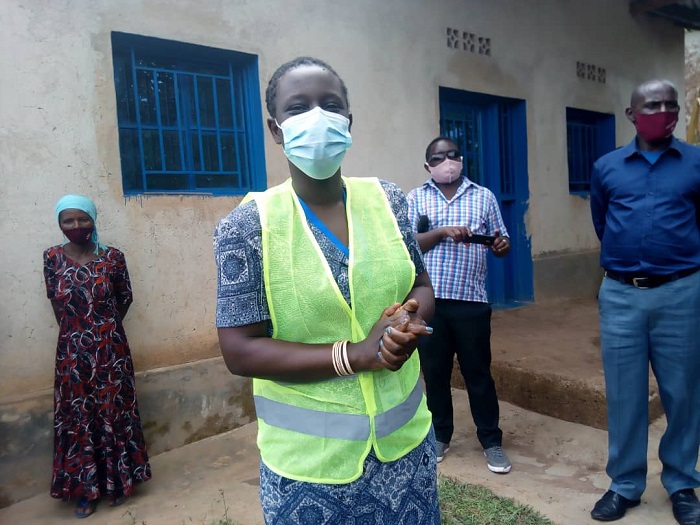
    Kayitare asaba abaturage kuzirika ibisenge kuko kwirinda biruta kwivuza
    Kayitare asaba abaturage kuzirika ibisenge kuko kwirinda biruta kwivuza

    Bamwe mu baturage bazirikiwe ibisenge barimo n’abasanzwe barasenyewe n’ibiza ariko bongeye kubaka na none ntibazirika neza ku buryo hari kugenzurwa niba nta hakiri ikibazo ngo bafashwe kuzirika neza ibisenge byabo.

    Uwimana Elisabeth wari warasenyewe n’ibiza akongera gusana, avuga ko yahombye nibura amafaranga asaga ibihumbi 700frw by’igisenge cy’inzu ye ubu akaba agiye kurushaho gushishikariza abandi kuzirika ibisenge.

    Agira ati “Iyo wasenyewe n’ibiza uba wahungabanye ntaho kwikinga ntacyo kwambara mbese ibyiza uwashobora kwirinda mbere yabikora, ikibazo gikunze kuba ni ubushobozi bukeya naho ubundi ubu nishimiye kuba bamfashije kuzirika n’iki kuko ntabwo nari naraziritse hose”.

    Jean Pierre Dusenge wo mu Kagari ka Gifumba mu Murenge wa Nyamabuye avuga ko we yaziritse igisenge ariko kiramutse kigiye yaba ahombye ibihumbi 600frw yacyubakishije kandi agahomba n’ibyo mu nzu birimo.

    Avuga ko agiye gufatanya n’abaturanyi gukomeza kuzirika ibisenge by’inzu zabo, abadafite ubushobozi bakareba uko babatera inkunga kuko n’ubundi iyo basenyewe n’ibiza bacumbikirwa mu baturanyi.

    Minisiteri ishinzwe Ibikorwa by’Ubutabazi (MINEMA) itangaza ko gusanira abangijwe n’ibiza bihenze kurusha kwirinda Ibiza kuko usanga niba hakenewe ifaranga rimwe ngo hakorwe ubwirinzi, bitwara amafaranga arindwi iyo habayeho gusana ibyangiritse hatabariwemo ubumuga n’impfu zishobora guterwa n’ibiza.


    source https://www.kigalitoday.com/amakuru/amakuru-mu-rwanda/article/muhanga-abadafite-ubushobozi-bwo-kuzirika-ibisenge-by-inzu-bazafashwa