Category: Uncategorized

  • Perezida Kenyatta yagaragaye ari gucinya umudiho indirimbo ya Diamond na Koffi Olomide iri guca ibintu muri iki gihe #rwanda #RwOT

    Umuhanzi Diamond Platnumz ukomoka muri Tanzania n'umunyabigwi ukomoka muri Repubulika Iharanira Demokarasi ya Congo, Koffi Olomide baherutse guhurira mu ndirimbo bise 'Waah!, iri guca ibintu muri iki gihe.

    Ni indirimbo yasamiwe hejuru ndetse mu gihe cy'icyumweru imaze, yarebwe na miliyoni 10 z'abantu; ibintu bidakunze gukorwa na buri muhanzi wese wo muri Afurika.
    Iyi ndirimbo ikunzwe mu buryo bukomeye, yageze no muri Kenya ndetse Perezida Uhuru Kenyatta yagaragaye ari kuyibyina

    Kenyatta yagaragaye abyina iyi ndirimbo mu gikorwa cya 'The Kenya Ni Mimi Youth Campaign' cyabereye ahitwa Bomas kuri uyu wa Mbere tariki 7 Ukuboza 2020. Icyo gihe Perezida Kenyatta yahamagawe ku rubyiniro aze kwifatanya n'urubyiruko rwari ruri kuyibyina, nawe ntiyazuyaza araza.

    Diamond Platnumz yanditse ku mbuga nkoranyambaga agaragaza ko yashimishijwe no kuba indirimbo ye na Koffi, yabyinwe na Perezida Uhuru Kenyatta.

    Ati 'Ntabwo tuzarekera gushimira Perezida Uhuru Kenyatta, ndetse na Kenya yose ku bw'urukundo no kudushyigikira banyereka buri munsi. Ndabakunda cyane.

    Indirimbo zose Diamond Platnumz akoranye n'abahanzi bo muri RDC ziramuhira kuko mu minsi ishize iyo yasubiranyemo na Innoss'B yitwa 'Yope' imaze kurebwa n'abasaga miliyoni 127 naho iyo yahuriyemo na Fally Ipupa yitwa 'Inama' ifite abayirebye kuri Youtube basaga miliyoni 77.

    Source : https://impanuro.rw/2020/12/09/perezida-kenyatta-yagaragaye-ari-gucinya-umudiho-indirimbo-ya-diamond-na-koffi-olomide-iri-guca-ibintu-muri-iki-gihe/

  • Leta igiye kujya ihemba abarimu bigisha mu mashuri y’incuke #Rwanda #RwOT via @kigalitoday #rwanda #RwOT

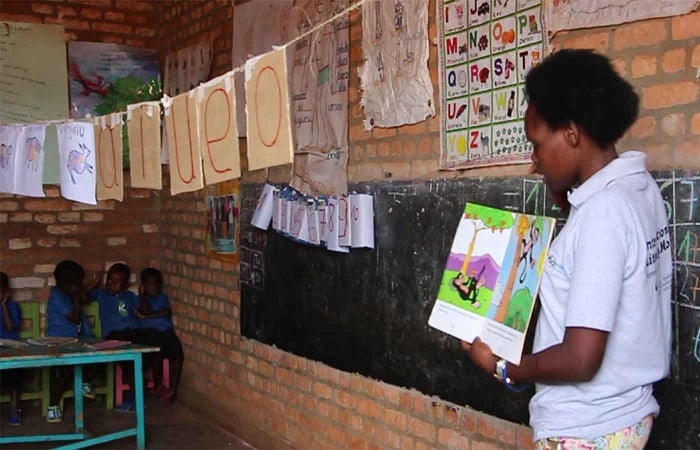
    Leta igiye kujya ihemba abarimu bo mu mashuri y
    Leta igiye kujya ihemba abarimu bo mu mashuri y’incuke (Ifoto Internet)

    Ibyo ngo byatumaga hari abana benshi batiga amashuri y’incuke kuko ababyeyi babo bangaga gutanga amafaranga yagenwe, none ngo ibyo bigiye gukemuka ubwo Leta izajya ibihembera.

    Minisitiri w’Uburezi Dr Valentine Uwamariya, avuga ko mu barimu bashya batangiye guhabwa akazi harimo n’abo mu mashuri y’incuke, bikazatuma n’abana bayagana biyongera, cyane ko intego ari uko muri 2024 abana batangirira kwiga mu mashuri y’incuke bazaba bagera kuri 45%.

    Agira ati “Turacyari kure y’iyo ntego kuko tukiri kuri 26%, ariko mu barimu bashya barimo guhabwa akazi harimo 580 bazigisha mu mashuri y’incuke mu gutangira, bakazajya bahembwa na Leta. Ubundi wasangaga ayo mashuri acungwa n’amatorero, amashuri yigenga cyangwa ababyeyi bishyize hamwe akaba ari bo bahemba mwarimu”.

    Ati “Ntibihagije kuko abo barimu bahwanye n’amashuri 580 gusa, bikaba byaratewe n’uko hari ibindi bikorwa byatwaye amafaranga menshi nko kubaka, kugaburira abana ku mashuri, icyakora buri uko umwaka uje bazagenda biyongera ari na ko n’abana bagana ayo mashuri bazagenda biyongera. Ibyo biratuma nizera ntashidikanya ko intego twihaye yo kuba twageze kuri 45% by’abana biga mu mashuri y’icuke muri 2024 izagerwaho”.

    Umwe mu barimu bigisha mu mashuri y’incuke, Musabyemariya Josiane, avuga ko kuba bagiye gushyirwa ku rutonde rw’abakozi ba Leta ari ibintu byo kwishimira cyane kuko ngo hari amahirwe atabageragaho bikabadindiza mu iterambere.

    Ati “Turashimira cyane Leta idutekerejeho, iki ni ikintu gikomeye ku barezi bo mu mashuri y’incuke kuko guhembwa n’ababyeyi akenshi bizamo ibibazo amafaranga akabura ugasanga umuntu ahora mu birarane. Ibyo byatumaga agashahara nubwo kanyuraga kuri konti, banki itakwizera ngo ibe yaguha inguzanyo kuko amafaranga atagira igihe gihoraho abonekeraho, urumva ko byadindizaga umuntu mu iterambere”.

    Ati “Iyo gahunda yo guhembwa na Leta nitugeraho bizaduhindurira byinshi mu buzima kuko tuzahita tunabona ubwishingizi mu kwivuza nk’uko abandi barimu ba Leta dukorana baba babufite twe tutabufite. Mbese bizatwongerera imbaraga zo gukora akazi kacu kuko murabizi ko kwigisha abana b’incuke ari umurimo ukomeye”.

    Hakizimamana wo mu Karere ka Muhanga ufite umwana wiga mu mashuri y’incuke, avuga icyo cyemezo ari igisubizo kuri we.

    Ati “Biradushimishije kuba Leta igiye kujya ihemba abarimu b’amashuri y’incuke kuko byajyaga bingora kwishyurira umwana, naba nabonye amafaranga make nkohereza ku ishuri abakuru undi nkamwihorera. Nibaza ko ubu nta bana bazongera kuguma mu ngo bageze igihe cyo kwiga kuko baziga nta kindi basabwa”.

    Abafite abana mu mashuri y’incuke ya Leta bavuga ko bishyura amafaranga ari hagati y’ibihumbi bitatu n’ibihumbi umunani ku gihembwe, icyakora mu yigenga ho amafaranga y’ishuri aba ari hejeuru bitewe n’imiterere y’ishuri.


    source https://www.kigalitoday.com/uburezi/ibikorwa-by-uburezi/article/leta-igiye-kujya-ihemba-abarimu-bigisha-mu-mashuri-y-incuke

  • African leaders commit to reduce internet cost by 50% #rwanda #RwOT

    African leaders under the Smart Africa Alliance on Monday, December 7, committed to bring down the cost of the internet in their countries under an ambitious project that will be implemented starting next year.


    The alliance has 30 member countries, representing over 750 million people and over 40 private sector members committed to the advancement of Africa through digital transformation.


    Mauritania became the latest member of the alliance, bringing member countries to 31.


    The decision by the alliance to slash internet cost by half is one of a series of decisions announced during their virtual board meeting, which was chaired by President Paul Kagame.


    Affordable internet remains out of reach in many parts of Africa, according to several reports.


    A 2018 report by Ecobank Research found that Africa has the most expensive mobile data, 'both in real and income-relative terms.'

    In Equatorial Guinea, Zimbabwe and Swaziland — the three most expensive countries — a gigabyte of data costs more than $20.

    Across the continent, the average price is estimated at $7.04 with a majority of countries recording prices above UN Broadband Commission's target of 2 per cent of monthly income.

    The UN Broadband Commission for Sustainable Development defines the internet as being affordable when 1.5 gigabyte of mobile data is priced at no more than 2 per cent of average income.

    In Rwanda, an internet user pays a 7.1 per cent share of the gross national income — $780 or around Rwf744,000 — for a monthly allowance of 2 gigabyte, according to the International Telecommunication Union (ITU).

    Yet, millions of people across the continent rely on the internet to connect with their family, loved ones, do business, access healthcare information and other activities.

    And with the Covid-19 pandemic, the need for affordable and reliable internet access increased as work, school, trade and many other essential services shifted online.

    At the ninth board meeting of Smart Africa, heads of state and government, as well as other representatives approved a strategy that would enable countries to reverse the trend.

    The strategy

    The board approved the strategy to create a special purpose vehicle to operationalize the 'bulk capacity purchase' project, which is aimed at reducing the cost of internet in Africa.

    'The cost of the internet in Africa is very expensive, so we really aim to reduce the cost by 50 per cent,' Didier Nkurikiyimfura, the Chief Technology and Innovation Officer at Smart Africa Secretariat, told The New Times on Tuesday.

    The target, he added, is to make it affordable for citizens to access the internet, currently considered a utility, and for businesses.

    'This will, in turn, help people and countries to get better connectivity, launch products and services online, and be able to achieve a knowledge-based economy,' he noted.

    Nkurikiyimfura revealed that the implementation of the 'bulk capacity purchase' project will kick-off next year, saying the development of a framework of that implementation will be complete before the end of 2020.

    'In the beginning, we shall start with seven to ten countries as the first phase. We shall work with a consortium of companies such as internet carriers and telecom operators,' he said.

    The strategy was approved in the presence of 10 Heads of State and Government, 16 country representatives, Smart Africa partner organisations, and members of the private sector.

    Johnny Kayihura, the chief executive at Axiom Networks, an internet service provider operating in Rwanda and DR Congo, admitted that few countries in the region have managed to achieve that.

    'I have to admit that Kenya, Tanzania, Uganda and SA [South Africa] have managed to get reasonable prices,' he said. 'But am talking on wholesale and fixed internet stand point, and not talking 3G/4G pricing.'

    The decision to slash internet tariffs is among the many major announcements made during the board meeting.

    The Board endorsed the Smart Africa Digital Academy (SADA) initiative, and the establishment of national digital academies under the SADA framework.

    Such academies will work with countries to provide practical and technical technology skills and knowledge, according to the organisation.

    Leaders on Monday also endorsed the Giga Africa Initiative, a UNICEF and ITU led project aimed at supporting enabling policies for cheaper smart devices in different countries.

    Four blueprints developed in 2020 were also unveiled.

    It includes the 'Digital Identity' blueprint for Africa championed by Benin, and the African blueprint for the development of 'ICT Start-Ups and Innovation Ecosystem' spearheaded by the Republic of Tunisia.

    The other blueprints are 'Smart Broadband 2025' led by Senegal, and the Smart Villages blueprint led by Niger.

    SOURCE: THE NEW TIMES

    50

    The post African leaders commit to reduce internet cost by 50% appeared first on TOP AFRICA NEWS.

    Source : https://www.topafricanews.com/2020/12/09/african-leaders-commit-to-reduce-internet-cost-by-50/?utm_source=rss&utm_medium=rss&utm_campaign=african-leaders-commit-to-reduce-internet-cost-by-50

  • #COVID19: Mu Rwanda habonetse abarwayi bashya 46, abakize ni 19 #Rwanda #RwOT via @kigalitoday #rwanda #RwOT

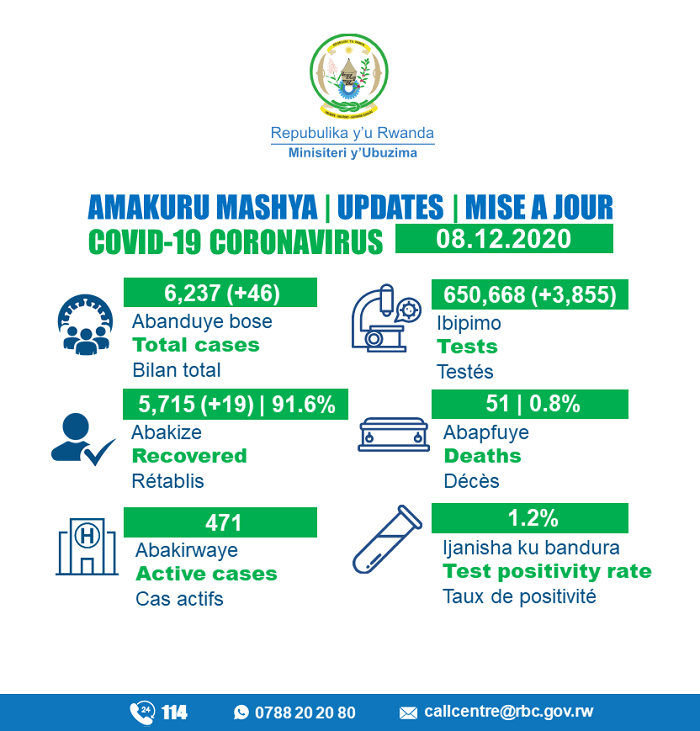
    Abo barwayi bashya 46 babonetse mu bipimo 3,855 bakaba barimo ababonetse i Kigali: 24, Rubavu: 10, Bugesera: 6, Kirehe: 3, Rusizi: 2, Rwamagana: 1.

    Kugeza kuri uyu wa Kabiri, mu Rwanda abamaze kwandura icyo cyorezo ni 6,237 muri bo abamaze gukira ni 5,715, naho abakivurwa ni 471.

    Mu Rwanda umugabo w’imyaka 45 yishwe na Covid-19 i Kigali ku wa Gatanu tariki 04 Ukuboza 2020 yuzuza umubare w’abantu 51 bamaze kwicwa n’iki cyorezo kuva cyagera mu Rwanda muri Werurwe 2020.

    source https://www.kigalitoday.com/ubuzima/indwara/article/covid19-mu-rwanda-habonetse-abarwayi-bashya-46-abakize-ni-19

  • COPEDU Plc nets Rwf 1.4 billion in 2019, grows capital by 22% #rwanda #RwOT

    The figures were revealed yesterday in shareholder’s general meeting which indicated net capital growth by 22% bringing it to Rwf4.4 billion.

    The increase in profits was largely attributed to different loans especially injected into women’s projects.

    Loans offered last year increased by 18% reaching Rwf 15 billion.

    The chairperson of COPEDU Plc Board Committee, Gashumba Liliane expressed delight over the growth evidencing the company’s unrelenting commitment to support women-led businesses.

    She stressed that the bank eyes to take the lead in promoting women in Africa.

    'We have strong ambitions to make COPEDU Plc, a leading and strong bank promoting women in Africa to the extent that others will learn from our experience,' said Gashumba.

    Mukarugambwa Ntwali Anne Marie hailed the contribution of COPEDU Plc to the development of women in Rwanda.

    'COPEDU Plc has enabled women’s progress. They have been able to realize their ambitions, contributed to the growth of their families and the country. This is what makes the progress of COPEDU Plc possible,' she noted.

    Created in 1997, COPEDU PLC has gradually grown and introduced new payments or withdraws methods using Debit Card and depositing or withdrawing using 'Push and Pull’ System. The institutions works with Business Development Fund (BDF) to provide loans to targeted customers.

    The Rwf 1.4 billion profit was announced during shareholders’ meeting.

    The chairperson of COPEDU Plc Board Committee, Gashumba Liliane expressed delight over the growth evidencing the company’s unrelenting commitment to support women-led businesses.

    IGIHE

    Source : https://en.igihe.com/news/article/copedu-plc-nets-rwf-1-4-billion-in-2019-grows-capital-by-22

  • Professor Sam Rugege joins Weinstein International Foundation Board of Directors #rwanda #RwOT

    Founded by deeply experienced dispute resolution pioneers in the U.S. and abroad, the Weinstein International Foundation is a non-profit organization dedicated to making mediation available and accessible worldwide in the face of increasing global challenges and conflict.

    Headquartered in San Francisco, the Weinstein International Foundation works through a global network of Alternative dispute resolution (ADR) trained dispute resolution professionals from around the world with the cultural understanding and local knowledge necessary to promote the resolution of conflict through mediation and other dispute resolution practices in their own countries and beyond.

    In a statement released yesterday, the foundation expressed optimism that Prof Rugege’s experience will be leveraged to reach its goals in Africa.

    'We are thrilled that Sam Rugege has joined our board. The honorable former chief Justice Sam Rugege is respected worldwide in the field of mediation, conflict resolution and reconciliation and will help lead our Foundation’s efforts to bring mediation to many regions in Africa with the same dedication and persistence he has demonstrated in Rwanda,' said Judge Danny Weinstein, the Founder of Weinstein International Foundation.

    Professor Sam Rugege expressed delight for the honor and assured to play his role especially in Africa where conflict continues to hamper development.

    'I am greatly honored and humbled to be a member of the Weinstein International Foundation, joining a highly distinguished group of ADR pioneers. The Foundation is a champion of peaceful resolution of conflicts and other disputes, leading the effort of promoting greater access to justice through mediation and supporting education and training in mediation around the world. Rwanda has benefitted from its programs and I look forward to playing my part in this noble mission, especially in Africa where conflict continues to cause avoidable suffering and hamper development,' he said.

    The statement further reads that Rugege is recognized for the achievements of Justice e in expanding the use of mediation in Rwanda.

    'The Foundation looks forward to continuing to make mediation more accessible and available in Rwanda through the ongoing contributions of Justice Rugege and Senior Fellows, Harrison Mutabazi, Anastase Nabahire and Bernadette Uwicyeza,' reads part of the statement.

    This expansion has been a critical component of the country’s drive to consolidate peace, stability and amicable resolution of disputes, as well as establish itself as a key economic hub in Africa in the aftermath of the 1994 Genocide against the Tutsi.
    As Chief Justice in Rwanda, Rugege was responsible for developing judicial policy and oversaw judicial reforms encompassing the use of court technologies, continuing legal education and specialization training for judges. During his tenure, access to justice was enhanced through constitutional challenges, public interest litigation and the promotion of court-annexed mediation. Now a certified and registered mediator, Rugege was recently appointed to serve as chairperson of the newly created Court Mediation Advisory Committee.

    Justice Rugege’s leadership in the Rwandan judiciary helped expand use of mediation in the country through the implementation of a court-annexed mediation project. Today, the Rwandan Judiciary remains committed to enhancing ADR and mediation and regularly refers cases to court-accredited mediators for mediation, as well as promoting mediation as a dispute resolution tool through public awareness campaigns.

    In Rwanda, the Ministry of Justice has initiated a national ADR policy project, with the goal of developing an informed ADR comprehensive plan and a coordinated approach to its implementation at both the local and national levels. As part of this plan, a national mediation policy is now pending approval by the government. If passed, this policy will make mediation mandatory at the pre-filing stage of civil disputes and substantially raise the awareness and use of mediation.

    Rugege was educated at Makerere University, Yale Law School and the University of Oxford, where he obtained an LLB, LLM and D. Phil, respectively. He began his career as a lecturer in law at Makerere University, before being forced to flee the terror of the Idi Amin regime in 1976. Rugege then taught at the Universities of Lesotho and Swaziland. Before being elevated to the bench, he was a professor of law at the University of the Western Cape (UWC) in South Africa, where he taught constitutional law and post-Apartheid land reform.

    Rugege was elected an Honorary Fellow of St. Peter’s College, Oxford 'in recognition of outstanding achievements in the field of law.' He has also been honored by the East African Law Society 'in recognition of distinguished service to the legal profession,' by the Rwanda Bar Association for 'outstanding contribution to the development of the legal profession and the justice sector in Rwanda' and by the Kigali Arbitration Centre for 'extraordinary contribution and dedication to the promotion of ADR in Rwanda.'

    Professor Sam Rugege has joined Weinstein International Foundation Board of Directors.

    IGIHE

    Source : https://en.igihe.com/news/article/professor-sam-rugege-joins-weinstein-international-foundation-board-of

  • Burundi Officially Launches Human Development Report 2019 Edition #rwanda #RwOT

    Burundi like any other country is part of the global system and has in one way or the other experienced regular demonstrations and a connecting thread is the deep and rising frustration with inequalities.

    Achim Steiner Administrator United Nations Development Programme (UNDP) observes in this report that too often, inequality is framed around economics, fed and measured by the notion that making money is the most important thing in life.

    Achim notes that understanding how to address today's disquiet requires looking 'Beyond Income, Beyond Averages and Beyond Today,' as this Human Development Report sets out to do'.

    However, the protagonist is power in all this: the power of the few; the powerlessness of many; and collective power of the people to demand change.

    This 2019 Human Development Report articulates the rise of a new generation of inequalities.

    'Just as the gap in basic living standards is narrowing, with an unprecedented number of people in the world escaping poverty, hunger and disease, the abilities people will need to compete in the immediate future have evolved,' Achim says.

    'A new gap has opened, such as in tertiary education and access to broadband—opportunities once considered luxuries that are now considered critical to compete and belong, particularly in a knowledge economy, where an increasing number of young people are educated, connected and stuck with no ladder of choices to move up. At the same time, climate change, gender inequality and violent conflict continue to drive and entrench basic and new inequalities alike.'

    'As the Human Development Report sets out, failure to address these systemic challenges will further entrench inequalities and consolidate the power and political dominance of the few, said Achim in the observation.

    The 2019 HDR contributes to that debate by presenting the facts on inequalities in human development and proposing ideas to act on them over the course of the 21st century.

    In a briefing note to organized into seven sections. The first section presents information on the country coverage and methodology for the 2019 Human Development Report.

    The next five sections provide information about key composite indices of human development: the Human Development Index (HDI), the Inequality-adjusted Human Development Index (IHDI), the Gender Development Index (GDI), the Gender Inequality Index (GII), and the Multidimensional Poverty Index (MPI).

    The final section covers five dashboards: quality of human development, life-course gender gap, women's empowerment, environmental sustainability, and socioeconomic sustainability.

    Understanding Human Development Index (HDI)

    The HDI is a summary measure for assessing long-term progress in three basic dimensions of human development: a long and healthy life, access to knowledge and a decent standard of living.

    A long and healthy life is measured by life expectancy.

    Knowledge level is measured by mean years of schooling among the adult population, which is the average number of years of schooling received in a life-time by people aged 25 years and older; and access to learning and knowledge by expected years of schooling for children of school-entry age, which is the total number of years of schooling a child of school-entry age can expect to receive if prevailing patterns of age-specific enrolment rates stay the same throughout the child's life.

    Standard of living is measured by Gross National Income (GNI) per capita expressed in constant 2011 international dollars converted using purchasing power parity (PPP) conversion rates.

    UNDP in Burundi during the official launch of the National Human Development Report 2019 edition under the theme: 'Social cohesion, demographic dividend and development'.

    Burundi's Performance

    Burundi's HDI value for 2018 is 0.423— which put the country in the low human development category— positioning it at 185 out of 189 countries and territories.

    Between 1990 and 2018, Burundi's HDI value increased from 0.295 to 0.423, an increase of 43.4 percent.

    Details also indicate that between 1990 and 2018, Burundi's life expectancy at birth increased by 13.4 years, mean years of schooling increased by 1.7 years and expected years of schooling increased by 6.9 years.

    Burundi's GNI per capita decreased by about 35.0% between 1990 and 2018.

    Meanwhile, an assessment on Multidimensional Poverty Index (MPI), the report reminds that the 2010 HDR introduced the MPI, which identifies multiple overlapping deprivations suffered by individuals in 3 dimensions: health, education and standard of living.

    In Burundi, 74.3% of the population (8,067 thousand people) are multidimensionally poor while an additional 16.3% are classified as vulnerable to multidimensional poverty (1,769 thousand people).

    The breadth of deprivation (intensity) in Burundi, which is the average deprivation score experienced by people in multidimensional poverty, is 54.3%.

    The MPI, which is the share of the population that is multidimensionally poor, adjusted by the intensity of the deprivations, is 0.403. Senegal and Sierra Leone have MPIs of 0.288 and 0.297 respectively.

    Some 40 years ago the founding father of human development, Professor Amartya Sen, asked a deceptively simple question: equality of what? He answered with equal simplicity: of the things we care about to build the future we aspire to.

    Professor Sen's words could help policy makers take a fresh look; to go beyond growth and markets to understand why people take to the streets in protest, and what leaders can do about it.

    UNDP in Burundi during the official launch of the National Human Development Report 2019 edition under the theme: 'Social cohesion, demographic dividend and development'.

    The post Burundi Officially Launches Human Development Report 2019 Edition appeared first on Taarifa Rwanda.

    Source : https://taarifa.rw/burundi-officially-launches-human-development-report-2019-edition/

  • Rwanda MPs Scan Through Nutrition Budgeting #rwanda #RwOT

    Rwanda's law makers are gathered for the second day of the high-level Parliamentarians workshop on nutrition budgeting analysis.

    The legislators are interacting on two topics including; Performance-based planning and budgeting for malnutrition and stunting reduction, and Nutrition budget tracking tools in an integrated framework.

    In general terms this exercise is important in proper understanding of resource availability and mobilization and challenges in tracking resources destined for nutrition programmes.

    The success of national nutrition plans relies heavily on adequate funding, but because of its multisectoral nature, planning and budgeting for nutrition work is not easy.

    However, despite recognition that creating and sustaining financial support for nutrition is critical, data on nutrition allocations remain limited.

    Transparent, routine and timely nutrition financing data are needed to support resource mobilization for nutrition and to help coordinate donor resources. Such information provides a roadmap for decision-makers to help overcome gaps in nutrition funds and inefficiencies in spending; make plans for expanding nutrition programming; and develop country-specific advocacy campaigns and investment goals.

    According to experts, although budget and expenditure analysis methods exist in other sectors, analyzing nutrition budget data poses a unique challenge because nutrition funding is often spread across multiple ministries or agencies, is frequently integrated into larger accounting headings, and is implemented through several different stakeholders and mechanisms.

    Despite these challenges, the process of analyzing budget and expenditure data is still the best way to understand how much funding is being given to nutrition and how it is allocated.

    The post Rwanda MPs Scan Through Nutrition Budgeting appeared first on Taarifa Rwanda.

    Source : https://taarifa.rw/rwanda-mps-scan-through-nutrition-budgeting/

  • Kuki gushima Imana ari ngombwa? #rwanda #RwOT

    Bibiliya irimo amategeko menshi avuga ku bijyanye no gushima Imana (Zaburi 106:1, 107:1, 1Ngoma 16:34, Abatesalonike 5:18). Muri iyi mirongo yose bagenda bagaragaza impamvu zo gushima Imana, harimo ko “Urukundo rwayo ruhoraho iteka” (Zaburi 136:3), “Imbabazi ze zihoraho iteka ryose”(Zaburi 100:5). Gushima Imana buri gihe bijyana no kuyihimbaza. Ntidushobora guhimbaza Imana ngo twibagirwe kuyishima.

    Kwiyumvamo gushima Imana ni byiza kuri twe, nk’umubyeyi w’umuhanga, Imana ishaka ko twiga kuyishimira impano zose yaduhaye (Yakobo 1:17) Ni mu nyungu zacu nziza kwibutswa ko buri kintu cyose dufite ari impano iva ku Mana, bitabaye ibyo twatwarwa no kwihugiraho, kwibona. Dutangira kwibwira ko ibyo twageze ho ari imbaraga zacu bwite zabidushoboje. Gushima Imana birinda imitima yacu ikaguma mu busabane n’Imana itanga impano zose.

    Gushimira bitwibutsa kandi ibyo dufite. Abantu bakunda kuba imbata zo kurarikira. Dukunze kwibanda ku byo tudafite. Mu gushima Imana ubudahwema twibutswa ibyo dufite. Iyo twibanze ku migisha kuruta ibyo dushaka, turanezerwa. Iyo dutangiye gushimira Imana ibintu dusanzwe dufata nk’ibisanzwe, ibitekerezo byacu birahinduka maze tukamenya neza ko ko tudashobora kubaho tutabonye imigisha n’imbabazi z’Imana.

    1Abatesalonike 5:18 haravuga ngo “Mu bibaho byose muhore mushima, kuko ari byo Imana ibashakaho muri Kristo Yesu”. Dukwiye gushima atari uko gusa twabonye ibyo dukunda, ahubwo dukwiye gushima no mugihe twahuye n’inzitizi cyangwa ibibazo tutari twiteze.

    Iyo dushaka gushimira Imana ku bintu byose yemerera kwinjira mu buzima bwacu, tuba twirinze umujinya. Ntidushobora gukora igikorwa cyo gushima no gusharira icyarimwe. Ntabwo dushimira Imana ibibi bitubayeho, ahubwo Imana idukomeza binyuze muri byo bibi (Yakobo 1:12). Ntabwo dushimira Imana akaga yemeye ko katubaho, ariko turayishimira iyo Iduhaye imbaraga zo kubyihanganira (2 Abakorinto 12: 9). Turayishimira ku masezerano yaduhaye ko “Ku bakunda Imana, ibintu byose bifatanyiriza hamwe kutuzanira ibyiza” (Abaroma 8:28).

    Dukwiye kugira imitima ishima Imana n’ubwo twaba tutabyiyumvisha neza gushima turi mu bibazo n’ingorane zo mu isi. Dushobora guhura n’ingorane ariko tugakomeza gushima Imana muri byose. Dushobora kubabazwa n’icyaha ariko tugakomeza gushima Imana. Ibi ni byo Bibiliya itwibutsa “Nuko tujye dutambira Imana iteka igitambo cy’ishimwe, tubiheshejwe na Yesu, ari cyo mbuto z’Iminwa ihimbaza izina ryayo” (Abaheburayo 13:15). Gushima Imana birinda imitima yacu ikaguma mu mubano mwiza n’Imana kandi ikaturinda amarangamutima mabi yashobora kutwambura amahoro Imana ishaka ko dutunga (Abafilipi 4:6-7).

    Muri macye gushima Imana ni ingenzi mu buzima bw’umukristo kuko bimufasha kurinda umutima we kwangizwa n’imihangayiko, bityo agakomeza kugira inyota yo gushaka Imana, uko ashaka Imana, ni ko igenda imuha imbaraga zo kunesha ibimugerageza bityo agahorana amahoro muri we. Kubw’ibyo muri byose dushime nk’uko Bibiliya ibitwigisha.

    Source: www.gotquestions.org

    [email protected]

    Source : https://agakiza.org/Kuki-gushima-Imana-ari-ngombwa.html