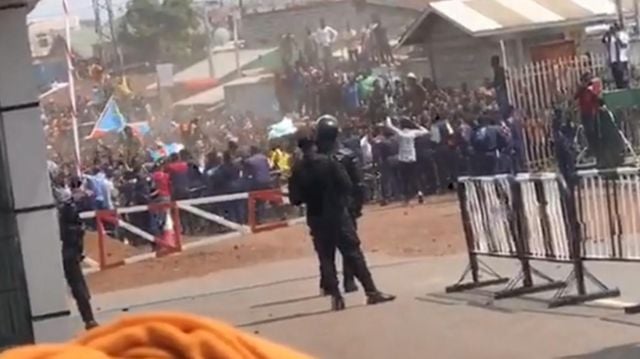
Polisi y’u Rwanda yatangaje ko kuri uyu wa Gatandatu tariki 18 Kamena 2022, abagizi ba nabi bitwaje intwaro bikekwa ko ari abo mu mutwe w’inyeshyamba wa FLN, (…)

Itangazo ryashyizweho umukono n’Umuvugizi wa Polisi y’u Rwanda, CP John Bosco Kabera, rivuga ko ku gicamunsi cyo kuri uyu wa Gatandatu, tariki ya 18 Kamena 2022, ahagana saa Munani, abagizi ba nabi bitwaje intwaro bikekwa ko ari abo mu Mutwe w’Inyeshyamba wa FLN baturutse hakurya y’Umupaka barashe ku modoka itwara abagenzi mu Murenge wa Kitabi mu Karere ka Nyamagabe yerekezaga muri Rusizi.
Rikomeza riti “Abo bagizi ba nabi bishe umushoferi n’umugenzi, banakomeretsa abandi batandatu bahise bajyanwa kuvurirwa ku Bitaro bya Kigeme no ku Bitaro bya Kaminuza bya Butare, CHUB.”
Amakuru avuga ko uwo mushoferi wishwe yitwa Ibrahim Issa. Yari asanzwe akorera Sosiyete ya Ritco. Amakuru avuga ko imodoka yari atwaye yari yahagurutse i Kigali mu masaha ya mbere ya saa Sita.
Igeze mu Karere ka Muhanga, byabaye ngombwa ko ihagarara kuko ipine yayo yari ifite ikibazo, bagenzi be bamufasha kuyihindura akomeza urugendo.
Itangazo rigenewe Abanyamakuru. pic.twitter.com/GQ4oO1zKuk
â” Rwanda National Police (@Rwandapolice) June 18, 2022
Amakuru avuga ko ahagana saa Munani, yahamagawe n’umwe mu bantu bari muri iyo modoka, akamubwira ati 'baraturashe' ndetse akamubwira ko 'Issa apfuye'.
Nta yandi makuru y’uko byagenze uwo muntu yigeze amuha kuko nyuma y’umwanya muto, ngo telefoni ye yahise iva ku murongo. Ku rundi ruhande, bivugwa ko uwarashe iyo modoka, bisa n’aho ari umuntu wari ahantu hirengeye kuko abari bayirimo batigeze bamubona.
Umushoferi amaze kuraswa, ngo imodoka yahise ita umuhanda igwa mu nkengero z’umuhanda. Inzego zishinzwe umutekano zahise zihagera, zitabara bwangu inkomere zizijyana kwa muganga.
Ku rundi ruhande, imodoka zari inyuma y’iyo Ibrahim yari atwaye zamaze umwanya munini zitarinjira muri uwo muhanda kuko inzego z’umutekano zari zikigenzura ako gace.
Umwe mu bashoferi bari mu modoka yari imbere y’iyo Issa yari atwaye yavuze ko iyo modoka yarashwe ikiri kwinjira muri Nyungwe nko mu bilometero bitanu uvuye mu Gasantere ka Kitabi.
Polisi y’u Rwanda yahise itabara ubwo bugizi bwa nabi bukimara kuba ndetse ababigizemo uruhare barimo gushakishwa.


Iriba.news@gmail.com
The post Nyamagabe: Abitwaje intwaro bishe 'umushoferi n'umugenzi' appeared first on IRIBA NEWS.
Source : https://iribanews.rw/2022/06/18/nyamagabe-abitwaje-intwaro-bishe-umushoferi-numugenzi/
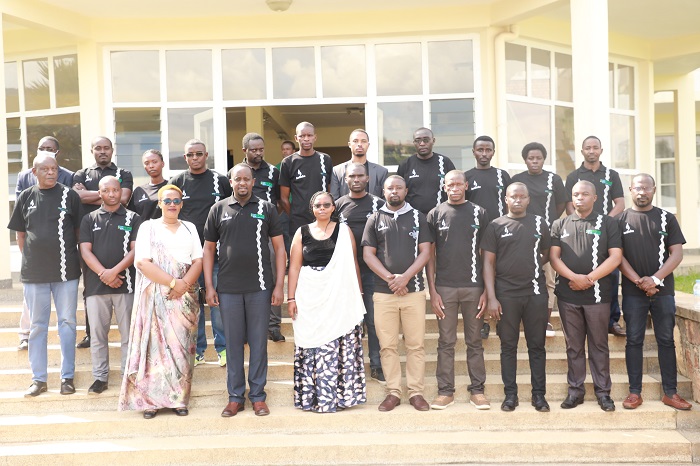
Ubuyobozi bw'ishuri rya College APPEC Remera-Rukoma riherereye mu karere ka Kamonyi, Umurenge wa Rukoma, kuri uyu wa 17 Kamena 2022 bibutse abari abanyeshuri, abarezi n'ababyeyi bishyize hamwe bagashinga iri shuri bishwe muri Jenoside yakorewe abatutsi mu Rwanda 1994. Abanyeshuri, Abakozi n'inshuti basabwe kwamagana abagihembera amacakubiri, abakirangwa n'ingengabitekerezo ya Jenoside, kenshi usanga babikorera ku mbuga nkoranyambaga.
Mu butumwa bwatanzwe n'uwari uhagarariye ubuyobozi bwite bwa Leta akaba Umunyamabanga Nshingwabikorwa w'Umurenge wa Rukoma, Nkurunziza Jean de Dieu yibukije ko abarezi bafite inshingano zo kurera neza abana b'Igihugu no kubasobanurira neza amateka y'Igihugu kugirango' tubashe kuzabona abazayobora Igihugu cyacu neza kizira amacakubiri n'ibindi bibazo bitandukanye'.

Yagize ati' Babyeyi namwe bantu bakuru, dukwiye kubwira abana bacu amateka twanyuzemo tukirinda kubabeshya kuko nizo nshingano dufite kugirango tuzabashe kubona abazayobora Igihugu cyacu neza, kugirango kitazongera kugwa mu kaga cyaguyemo Jenoside yakorewe Abatutsi igashoboka'.
Akomeza yibutsa urubyiruko ko rukwiye kugendera kure ibitekerezo by'abapfobya Jenoside. Yabibukije ko abameze batyo batarekeye aho imigambi mibi, kuko bamwe mu bana bakomoka ku babyeyi bagize uruhare muri Jenoside bagerageza kuyipfobya bifashishije imbuga nkoranyambaga, banyuzaho inyigisho z'uburozi bwo gukangurira abantu inyigisho z'amacakubiri no kutemera ukuri ku byabaye, ndetse n'uruhare rw'ababyeyi babo mu mateka ya Jenoside yakorewe Abatutsi mu Rwanda.
Mu buhamya bwatanzwe na Nsengiyumva Emmanuel warokotse Jenoside, yabwiye abari bitabiriye iki gikorwa ko abateguye Jenoside bateye umuruho Igihugu kubera kwica abaturanyi babo basangiraga, bakabambura ababyeyi, abana ndetse n'abavandimwe.
Akomeza ashimira Leta y'u Rwanda kuko yahaye agaciro uburezi, bitandukanye na cyera aho bigaga Politiki mbi yo gutonesha no kurobanura abantu, ikagusiga kandi ufite ubwenge, hakagenda utabikoreye kubera ubwoko ndetse bakaba barahagurutsaga abana hakurikijwe amoko y'Abatutsi, Abatwa n'Abahutu. Yibukije kandi ko iyo myirondoro yanakoreshwaga mu gihe cyo kwaka serivise.

Perezida w'Umuryango uharanira inyungu z'Abarokotse Jenoside yakorewe Abatutsi mu karere ka Kamonyi, Benedata Zacharie yasabye abanyeshuri kwirinda abashaka kubashora mu macakubiri, baba abari mu gihugu cyangwa hanze yacyo kuko Jenoside yatwaye abarerwaga, ababyeyi n'abavandimwe bicwa na bagenzi babo bakuranye cyangwa babonye bakura.
Yagize ati' Hari abarekereje bashaka kubashuka bashaka kubigisha inyigisho z'amacakubiri baba mu gihugu cyangwa hanze yacyo, ariko benshi muri mwebwe hari abo mwakagombye kuba mubona mutigeze mubona kubera ko Jenoside yakorewe Abatutsi yabatwaye, bicwa n'abo baturanye'. Yabasabye kwirinda abantu nk'abo kuko nta keza kabavaho, ko ari uburozi bubi bwakongera gusubiza Igihugu mu icuraburindi.
Benedata, yemeza ko ahazaza heza hejo Igihugu kihafite bityo nta mwana w'u Rwanda ukibuzwa uburenganzira bwo kwiga nkuko Politiki ya cyera yabikoraga, ikemerera igice kimwe kwiga abandi baragizwe abavamahanga, ariko ubu igishyizwe imbere n'Ubumwe budacamo abantu ibice' kuko amateka twabayemo yigishije igihugu. Ntabwo twumvaga ko abacu bazicwa n'abaturanyi twasangiye akabisi n'agahiye. Iyo baza gushishoza inyigisho bahabwaga bakumva ko twese tuva amaraso ntabwo Jenoside yari gushoboka, bari kuyihungira kure'.
Umugwaneza Francois wavuze mu izina ry'Ubuyobozi bw'Ikigo cya College APPEC Remera-Rukoma, yavuze ko ikiraje ishinga iki kigo ari uburezi bufite ireme. Yibukije kandi ko iki kigo cyabayeho kubera Politiki mbi y'abayoboye igihugu kuva mu 1959 -1973, aho iyi Politiki mbi yatumye ababyeyi bo muzahoze ari komini za Musambira, Taba na Kayenzi bishyira hamwe kugirango Politiki y'iringaniza yatumaga abana batsinda ntibahabwe amashuri babone aho nabo bigira.

Ibyo byaje gutuma iri shuri rishingwa mu mwaka 1984 rifasha abari batuye aho ndetse n'abava ahandi barajugunywe na ya Politiki mbi yo guheza bamwe abandi bagahabwa ibirenzeho kandi bose bari abana b'u Rwanda.
Nyuma y'imyaka 28 Jenoside yakorewe Abatutsi ibaye, iki kigo kimaze kubona amazina y'Abanyeshuri 30, Abarezi batatu(3) n'abagize uruhare mu ishingwa ryacyo icyenda (9). Bakomeje gusaba kandi ababa bazi abataramenyekana bize, biganye muri iki kigo kubavuga nabo bagashyirwa ku rutonde. Ubuyobozi bw'Ikigo buteganya kubaka ikimenyetso ndangamateka muri iri shuri kikazashyirwaho amazina y'abazaba baramenyekanye.


Akimana Jean de Dieu
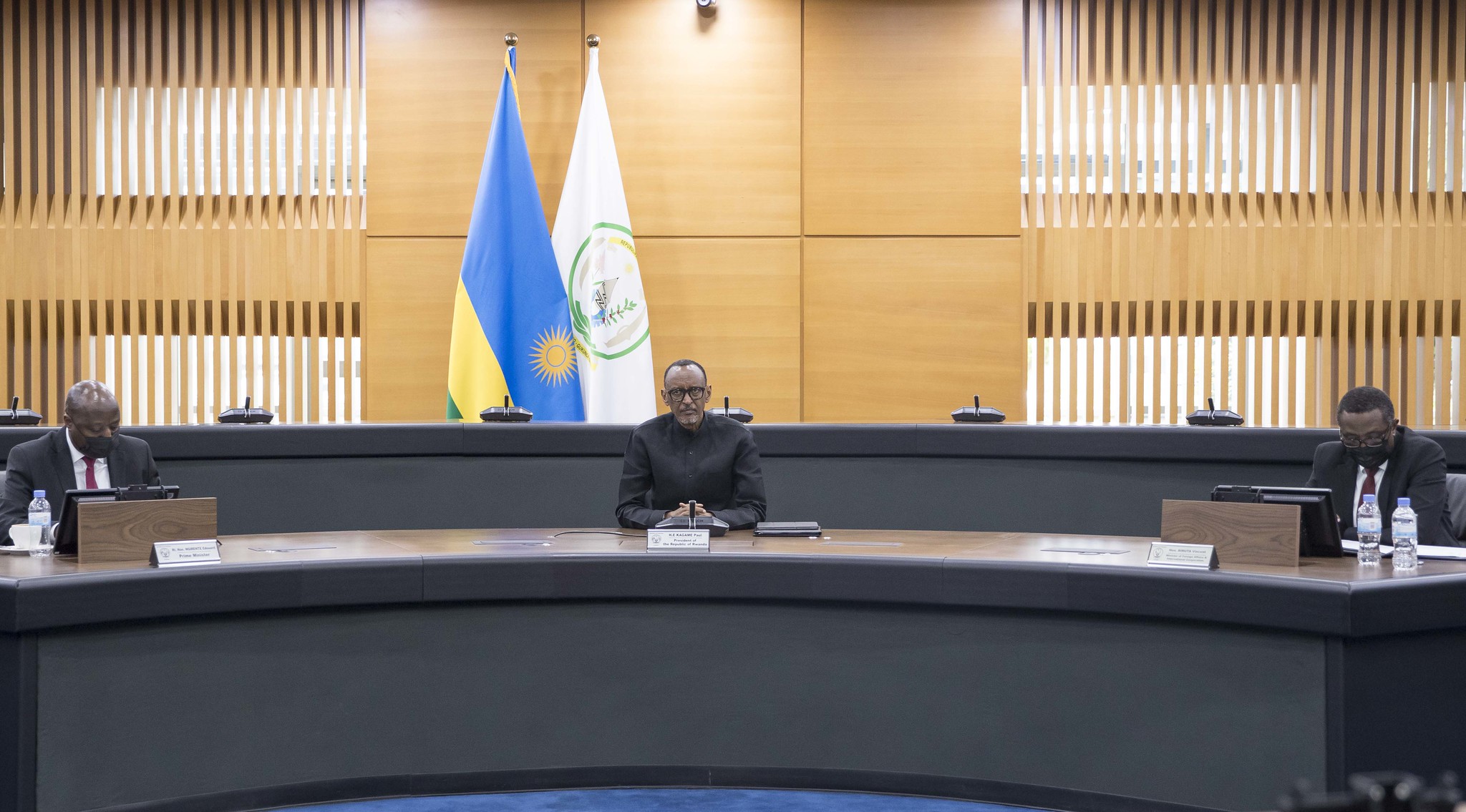

Ikipe ya Sunrise FC yagarutse mu cyiciro cya Mbere nyuma y'umwaka umwe gusa ikivuyemo,nyuma yo guisezerera Vision FC ku bitego 4-1 mu mikino yombi.
Mu mukino wo kwishyura wa 1/2 wabaye uyu munsi,amakipe yombi yanganyije igitego 1-1 mu gihe uwabanje warangiye iyi kipe y'i Nyagatare inyagiye Vision FC ibitego 3-0.
Ikipe y'umutoza Seninga Innocent ni yo yafunguye amazamu mu mukino wo kuri uyu wa Gatandatu,ku gitego cyinjijwe na Rucogoza Djihad ku munota wa 24.
Vision FC yari yakiriye uyu mukino wo kwishyura, yishyuriwe na Mukunzi Vivens ku munota wa 35, birangira inasezerewe.
Undi mukino wa 1/2,uzahuza Rwamagana City FC na Interforce FC ntibiramenyekana igihe uzabera aho izatsinda izahita izamuka mu cyiciro cya mbere.Gusa hazabaho umukino wa nyuma wo mu cyiciro cya kabiri aho izatsinda hagati y'aya makipe yombi izahura na Sunrise FC.
Uyu mukino wundi wa 1/2 nwatindijwe n'ubujurire bwa Rwamagana City FC yari yarezwe na AS Muhanga ko yakinishije umukinnyi ufite amakarita atatu y'umuhondo.
FERWAFA yabanje gukura Rwamagana City mu irushanwa, ariko nyuma y'ubujurire ikirego cya AS Muhanga n'icyemezo cyari cyafashwe mbere biteshwa agaciro kuko Mbanza Joshua atigeze ageza amakarita yashinjwaga.
Sunrise FC yari imaze umwaka umwe imanutse, aho yari yajyanye na AS Muhanga izongera gukina mu Cyiciro cya Kabiri n'umwaka utaha.
Sunrise FC n'indi kipe izazamuka, zizabisikana na Etoile de l'Est na Gicumbi FC zari zimaze umwaka umwe gusa mu Cyiciro cya Mbere.

Sunrise FC yagarutse mu Cyiciro cya Mbere nyuma y’umwaka umwe, isezereye Vision FC zanganyije igitego 1-1 mu mukino wa 1/2 wo kwishyura kuri uyu wa Gatandatu.
Kunganya uyu mukino byatumye Sunrise FC igera ku mukino wa nyuma, ku giteranyo cy’ibitego 4-1 mu mikino ibiri.
Ikipe y’umutoza Seninga Innocent ni yo yafunguye amazamu ku gitego cyinjijwe na Rucogoza Djihad ku munota wa 24.
Vision FC yari yakiriye uyu mukino wo kwishyura, yishyuriwe na Mukunzi Vivens ku munota wa 35, ariko ntibyari bihagije.
Ku mukino wa nyuma, Sunrise FC izahura n’ikipe izakomeza hagati ya Rwamagana City FC na Interforce FC.
Uyu mukino wundi wa 1/2 ntibiramenyekana igihe uzabera kubera gutinzwa n’ubujurire bwa Rwamagana City FC yari yarezwe na AS Muhanga ko yakinishije umukinnyi ufite amakarita atatu y’umuhondo.
FERWAFA yabanje gukura Rwamagana City mu irushanwa, ariko nyuma y’ubujurire ikirego cya AS Muhanga n’icyemezo cyari cyafashwe mbere biteshwa agaciro kuko Mbanza Joshua atigeze ageza amakarita yashinjwaga.
Sunrise FC yari imaze umwaka umwe imanutse, aho yari yajyanye na AS Muhanga izongera gukina mu Cyiciro cya Kabiri n’umwaka utaha.
Nubwo yari imaze kumanuka, Sunrise FC yagumanye abakinnyi bayo ndetse umutoza Seninga Innocent wahawe akazi, yongeramo amaraso mashya arimo Rucogoza Djihad wavuye muri Bugesera FC.
Sunrise FC n’indi kipe zizazamukana, zizabisikana na Etoile de l’Est na Gicumbi FC zari zimaze umwaka umwe gusa mu Cyiciro cya Mbere.

Source : http://isimbi.rw/siporo/article/sunrise-fc-yagarutse-mu-cyiciro-cya-mbere
The Eastern part of Rwanda had been a vacant land for decades before the government found a use, turning it into the country's breadbasket through irrigation.
Farmers have traditionally irrigated rice by lowering groundwater into marshlands by digging drains. They typically build unsaturated zones between drains by piling up excavated soil. When groundwater levels drop during the dry season, farmers construct soil check dams in gutters to maintain groundwater levels at crop root zones.
When groundwater is not sufficient, farmers build what is called 'wood-pole weir structures' across main streams to divert water into earthen canal networks.
Following the national irrigation master plan development in 2010, the Rwanda government has implemented additional irrigation projects, mainly in the eastern part and other regions using hillside irrigation.
With these projects, the Rwandan government set its target to develop 40,000 hectares of irrigated land by 2017 and 100,000 hectares by 2020. As of June 2018, some 52,936 hectares had been developed, according to the Rwanda Agriculture and Animal Resources Development Board (RAB)
By 2024, Rwanda aims to develop 102,284 hectares of irrigated land. These systems use surface and groundwater sources, including lakes, rivers, wetlands, or water reservoirs of various sizes-small, medium, or large dams.
Chart 1: Groundwater use in Rwanda

There are three major irrigation sites in eastern Rwanda: Kagitumba, Nasho/Mpanga, and Gashora.
One such impactful irrigation project is the Nasho Solar-Power Irrigation Project located in the Kirehe district, funded to the tune of USD54 M by billionaire philanthropist Howard G Buffett's foundation as part of a broader USD500 M financing he committed in 2015 to Rwanda's agricultural development.
The mega irrigation scheme was unveiled in March 2020 at a fanfare ceremony presided over by President Paul Kagame. Buffett himself was present.
The 3.3 MW Nasho Solar power plant commissioned in 2017 powers up the irrigation system, which draws water from Lake Nasho to farmland, reaching 1,173 hectares belonging to about 2,000 smallholder farmers. The surplus power is sent to homes within the community.
Collette Nyiransabimana lived a poor life for many years due to a prolonged drought that hit her home area in Munini cell, Mahama sector in Kirehe district, leaving them destitute and hungry.
Hardly could she manage to feed her four children despite more efforts she could put in to grow crops on her small land.
'The area is prone to drought, and we rarely get a harvest whenever we plant crops. As a result, I lived a miserable life, and I was too poor,' she adds.
'We used to grow sorghum and beans, but the harvest was mediocre; sometimes we could harvest almost nothing due to the long dry spells,' she adds.
Nyiransabimana's plot of land, which is about half a hectare, is on the bank of the Akagera River that flows from Tanzania to Rwanda's eastern province.

For many years, Kirehe residents and other people around the Akagera River used to see it as a threat and were constantly threatened that they could drown.
Little did they know that the water from the river could be a source of much-needed income when they used it in irrigation?
It was not until recently that the local leaders mobilized them to start irrigation using the same water that farmers embraced the practice.
'I started irrigation using buckets to fetch water from Akagera River, and it was so tiring; I used more energy; I used to grow vegetables and some fruits,' she says. That was about three years ago. Nyiransabimana owns the land of about a hectare.
Two years ago, she learned about the district's plan to offer generators in a subsidized scheme and rushed there to get it.
'When I heard that the district offered a generator on a subsidized scheme, I went there; I paid only 103,000 Rwandan Francs to get it, and the district covered the rest,' she says.
'I now use the generator to practice irrigation using Akagera river water; the generator pumps water from the Akagera River. We use the water to grow vegetables such as carrots, onions, bell peppers, cabbages, etc.,' she says.
And life has changed since she started irrigation using the generator that pumps water. She sells the produce to the refugees hosted in the neighboring Mahama refugee camp.
'We have a big market as the camp hosts thousands of refugees who come and buy vegetables,' she says.
'Akagera river water is essential for us; life has changed since we started practicing irrigation. We grow and irrigate, and we no longer depend on rain to grow. We grow whenever we want, and the harvest is good,' Nyiransabimana says with pride. More has been achieved so far.
Nyiransabimana is one of the hundreds of farmers who practice irrigation around the Akagera River using its water. She says that a lot has been achieved thanks to the practice.
'I have managed to pay mutually de sante for my children, and I can feed them; I have built my own modern house worth 1 7 million Rwandan francs of 30, and I also bought a plot of land worth 1,2 million Rwandan Francs,' she says.
She is also grateful for the central government, especially the district that assisted her in getting the generator on the subsidized scheme.
'I am grateful to the government for offering the generator; without it, life would be worse,' she says. 'I am committed to working hard to get more returns; I hope my future is better thanks to the Akagera river,' she adds.
Jean Paul Nzabonimpa, also from the Mahama sector, says he practices modern agriculture using a generator to pump water from the Akagera Riv. He says he harvested crops that he sold Rwf2,5 million last season. He currently has crops grown on three hectares and looks for more yields.
'I practice irrigation using generators, and this has changed my life; I employ casual workers to plant and irrigate; we are grateful that the Akagera river is no longer a threat to us but serves as a water source for us to irrigate,' he says. 'We now don't have worries of seasons and droughts that used to hit the areas,' he adds. According to Bruno Rangira, the Kirehe district Mayor, the eastern province part, especially that bordering Tanzania, is prone to disasters.
He said that farmers benefit from the Akagera River and practice water irrigation.
He says that the district gave generators to individuals on subsidy, and 'It has paid off as all of them get improved yields compared to before when disasters could not allow them to harvest,' he says
He added that the district has encouraged farmers to join cooperatives and apply for subsidized generators rather than as individuals for support.
'Some have started regrouping on cooperatives, and it is easier for them to get generators; using Akagera river water has been instrumental in fighting poverty among farmers, and we hope more will be achieved,' Rangira added.

Illustration 1: How a Transboundary Aquifer works (static illustration)
Making groundwater sustainable
Most of Rwanda's water is stored in lakes (around 80%), followed by groundwater (19%). Households, agriculture, and water utilities lead to groundwater abstraction (taking out), with around 45%, 22%, and 19%, respectively.
In the year 2000 planting season, farmers in the Bugesera district went to their farmland as usual. They planted seeds. However, months went by without a drop of rain. Farmers there vividly remember the period.
The situation here had been as such since the 1970s when forests in the area were destroyed for firewood and charcoal. The disappearance of forest cover in Bugesera was the same in the entire eastern region.
According to FONERWA, a national environment fund, the different lakes in eastern Rwanda were slowly drying up because there was no rain to replenish them. The groundwater table was, without a doubt, affected. The situation was so dire government had to do something.
In 2001, the government secured USD 48.16 M (Rwf 50 billion) funding from the African Development Bank for planting 567.56ha of trees around the Bugesera area, Lake Muhazi, and other lakes to cover 149,487ha.
Bugesera region has visibly changed today. It is greener, produces more food, and gets some rain â” a notable impact of the tree planting scheme from many years ago. During 2007 â” 2008, although lakes in east Rwanda had begun reviving, a new threat emerged; the destructive water hyacinth weed. It created a new threat to fish survival.
The year 2013 was for action. The government hired more than 1,000 local villagers, including fishers and their families, to clear the weed from the lake in Bugesera. The weed is still there on some lakes, but the scale is much smaller.
Lake Cyohoha, for example, whose fish had disappeared completely, is said to currently contribute at least 35-50 tons of fish annually to the national annual production. Experts note that preservation of surface water bodies like it was done with the eastern Rwanda lakes helps 'recharge' (increase) groundwater reserves.
A call for more groundwater data.
As the situation stands, there is a need for a comprehensive database on groundwater in Rwanda. This, they argue, will enable better planning for the sustainable use of natural resources.
The lack of data on the depths and volume of aquifers could pose land degradation risks.
Some estimates, like a 2021 World Bank-commissioned study, suggested that in terms of annual water volumes, Rwanda has about 6 to 7 billion cubic meters of surface water, 4.50 to 5 billion cubic meters of groundwater, and 27.50 billion cubic meters of rainwater.
Map 2: Projected Use of Renewable Groundwater


The government has partnered with UNICEF for a groundwater mapping project. A call for consultancy services to carry out the study was issued in October 2021, with the tendering process planned for completion by October this year. Despite efforts by Rwanda's government, reads the call in part, considerable gaps remain with regard to groundwater resources.
A similar study was planned in 2018 by a joint team of Rwandan and Dutch experts funded by the Netherlands. The advertised tender said the study would assess the availability of groundwater, depth of potential aquifers, possible yields, and water quality, in addition to recommending the optimum sites for long-term production boreholes. The results are yet to be released.
The latest interest comes from the Nile Basin Initiative (NBI), an intergovernmental partnership of 10 Nile Basin countries, with Rwanda as one of the members.
NBI's five-year (2020-2025) project â” 'Enhancing Conjunctive Management of Surface Water and Groundwater Resources in Selected Transboundary Aquifers, aims to strengthen the knowledge base, capacity, and cross-border institutional mechanisms. The USD 5.3 million project will further build and expand understanding of groundwater resources through detailed mapping and assessment of the three aquifer systems.
It will also aid the national achievements and reporting of water-related Sustainable Development Goals; and will be supportive of environmental protection while enhancing the socio-economic development of the Basin's population. The three aquifers under study are Kagera Aquifer shared by Rwanda, Burundi, and Tanzania; the Mt Elgon aquifer shared between Kenya and Uganda; and the Gedaref-Adigrat aquifer shared between Ethiopia and Sudan.
The Global Environment Facility funds the project (GEF), implemented by United Nations Development Program (UNDP) and executed by NBI.
InfoNile supported this article with funding from Nile Basin Initiative.
Â
The post Groundwater turns Eastern Rwanda into a breadbasket appeared first on IRIBA NEWS.
Source : https://iribanews.rw/2022/06/17/groundwater-turns-eastern-rwanda-into-a-breadbasket/