Category: Uncategorized

  • Rwanda-COVID 19: Concerns as students and teachers not returning to schools #rwanda #RwOT


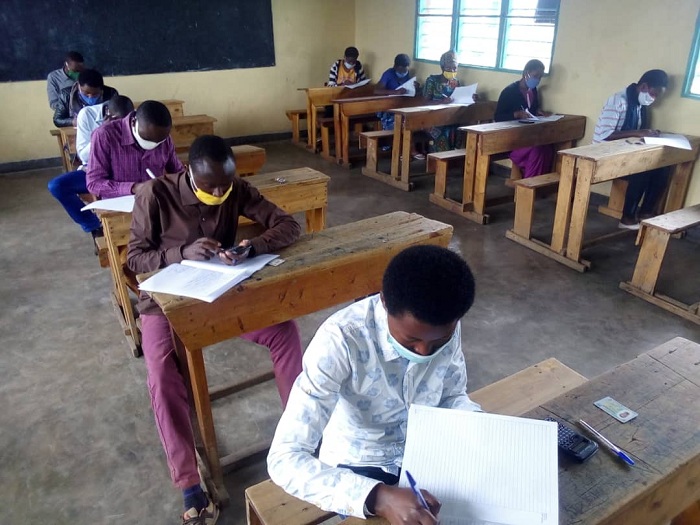
    The Ministry of Education has released figures for teachers and students who have not returned to school since reopening after closure due to Covid-19. These figures show that so far 11% of primary school students and 4.8% of teachers have not returned to Schools.

    The Ministry of Education has released statistics on teachers and students who have not returned to school since the reopening, indicating that in primary schools 11% of students and 4.8% of teachers have not returned to schools.

    On November 2, schools resumed operations after eight months of closure in a bid to prevent the spread of the COVID-19 pandemic, which has killed 45 people in Rwanda so far.

    Although the students have resumed classes, the Ministry of Education has indicated that there are large numbers of students who have not yet returned to classes in both Kigali City and various provinces.

    Overall, in primary schools, the number of students returning to classes is 89%, which means that there are 11% who have not yet returned and it is not yet known if they are dropping out of school or for other reasons.

    Of these students, 85% were in Kigali City, 94.5% in Southern Province, 89.3% in Northern Province, and 89.2% in Eastern Province. Western Province primary school who returned account for 84.2%.

    The problem of a large number of students who do not return to school is not only apparent in primary schools but also in high school there are those who have not returned, as MINEDUC figures show that those who returned account for 91% while up to 9% did not.

    Of these, 85.4% are from Kigali City, while those from the Southern Province are 92.1% and from the Northern are 93.5%, from the Eastern Province is 92%, and from the Western Province 89.4%.

    Statistics show that primary school teachers in Kigali City, about 96% are returning to work, in the Southern Province it is 97%, the Northern Province is 96%, the Eastern Province is 93% while in the Eastern Province it is 93%.  

    This results in a nationwide return of 95.2% of primary school teachers, while about 4.8% of them do not return.


    Returning high school teachers account for 95.6% while those who have not returned is 4.4%, of those 96% are from Kigali City; 97.2% are from the Southern Province, 97% from the Northern Province, 93.3% from the Eastern Province, while 94.8% from the Western Province.


    61

    The post Rwanda-COVID 19: Concerns as students and teachers not returning to schools appeared first on TOP AFRICA NEWS.

    Source : https://www.topafricanews.com/2020/11/17/rwanda-covid-19-concerns-as-students-and-teachers-not-returning-to-schools/?utm_source=rss&utm_medium=rss&utm_campaign=rwanda-covid-19-concerns-as-students-and-teachers-not-returning-to-schools

  • Impinduka 2 zishobora kuba muri 11 b’Amavubi bakinnye umukino ubanza wa Cape Verde #rwanda #RwOT

    Uyu munsi Amavubi y’u Rwanda arakina umukino w’umunsi wa 5 mu itsinda F mu gushaka itike y’igikombe cy’Afurika cya 2022 aho ari bwakire Cape Verde kuri Stade Regional i Nyamirambo.

    Umukino wabereye muri Cape Verde mu cyumweru gishize amakipe yombi yanganyije 0-0.

    Uyu munsi abasore b’Amavubi barahiga gutsinda uyu mukino bakava ku mwanya wa nyuma bariho mu itsinda.

    Bakigera mu Rwanda mu rukerera rwo ku wa Gatandatu, Mashami Vincent yahise yongeramo imbaraga ahamagara rutahizamu Sugira Ernest wari wasigaye mu Rwanda.

    Byitezwe ko uyu munsi saa 15h Amavubi ari bukine asatira cyane ashaka ibitego dore ko mu mikino 3 itambutse nta gitego na kimwe yigeze abona.

    Nta gihindutse Mashami Vincent ashobora kuza gukora impinduka 2 muri 11 babanjemo ku mukino wo muri Cape Verde aho Sugira Ernest ashobora kubanzamo mu mwanya wa Jacques Tuyisenge wakinnye bigaragara ko afite ikibazo cy’imvune.

    Indi mpinduka ishobora kuba, Ally Niyonzima na we ashobora kuza kubanza ku ntebe y’abasimbura umwanya we ugafatwa na Muhire Kevin.

    Undi mukino wo muri iri tsinda waraye ubaye, Cameroon yatsinze Mozambique 2-0.

    Muri iri tsinda Cameroon ni iya mbere n’amanota 10, Mozambique ifite 4, Cape Verde 3 n’u Rwanda 1.

    11 bashobora kuza kubanzamo

    Umunyezamu: Kwizera Olivier

    Ba myugariro: Omborenga Fitina, Imanishimwe Emmanuel, Manzi Thierry na Rwatubyaye Abdul

    Abakina hagati: Yannick Mukunzi, Bizimana Djihad na Muhire Kevin

    Ba rutahizamu: Haruna Niyonzima©, Meddie Kagere na Sugira Ernest

    Sugira Ernest ashobora kuza kubanza mu kibuga

    Meddie Kagere n’ubwo afite ikibazo cy’ivi araza kuba ayoboye ubusatirizi

    Kapiteni Haruna n’ubundi nta gihindutse araza kubanza mu kibuga

    Source : http://isimbi.rw/siporo/article/impinduka-2-zishobora-kuba-muri-11-b-amavubi-bakinnye-umukino-ubanza-wa-cape-verde

  • LAFREC-supported communities move to protect Gishwati-Mukura Park #rwanda #RwOT

    The communities surrounding Gishwati-Mukura National Park and Biosphere Reserve, say their survival no longer depends on activities leading to its destruction thanks to the support from Rwanda Environment Management Authority (REMA) through Landscape Approach to Forest Restoration and conservation (LAFREC) project.

    The World Bank-funded project through REMA, LAFREC aims at conservation and restoration of the Gishwati-Mukura National Park which was being damaged by locals due to illegal mining, livestock farming among others.

    According to Vivine Amariza, the acting sector specialist of LAFREC project, the project has contributed to the improvement of the livelihoods of people surrounding the Gishwati-Mukura landscape where efforts have been made to restore the deforested area, to protect the riverbanks in the park in the districts of Rutsiro, Ngororero, Nyabihu and Rubavu, since December 2014.

    In particular, the communities were supported to improve livelihoods through potato farming by supplying quality seeds, pig breeding, planting new forests and replacing old ones to break the habit of destroying park trees and making terraces on their lands to increase productivity.

    These activities have enabled beneficiaries to meet their basic needs in daily life thus their minds are changing and they are determined to take part in maintaining the park instead of damaging it.

    Evariste Ntimenyerwa, a resident of Bwira Sector, Ngororero District, one of the beneficiaries said: 'We used to go to the park because of hunger as there are minerals. We were given pigs from which we are getting money to afford what we need. Moreover, our terraced fields make them more productive. We can't go back to the park. “

    Bazingerero Evariste, the leader of the pig breeding group in Gashubi Cell, also says the LAFREC activities have helped them get out of poverty.

    'We were given 17 pigs, now we have more than 100 pigs. We have given some of them to group members. Before this project started, people here used to go to the park for survival reasons but now we are fed on what we produce.' He said.

    Hakuzimana Chrysologue, a resident of Nyange Sector in Ngororero District, one of the beneficiaries of the forest planting program, said it will help them avoid park intrusion where they were looking for trees and pasture.

    'We have been lucky to have a national park here in the Western Province, it is an added opportunity for tourism in our region. We need to protect it from any harm and I hope none will go in the park to cut trees, as we have got our own forests. “

    An area of ​​18.42 hectares which has been damaged by illegal mining in Gishwati-Mukura Park is to be rehabilitated, particularly in Ngororero District. Four hectares were left empty after residents cut down all tree cover.

    At least 131 hectares of land have been afforested during LAFREC project activities. There are about 9,000 beneficiaries in Ngororero district and 580 in Nyabihu district.

    Overall, the project's activities have been instrumental in transforming people's lives, according to Rutsiro District Mayor Ayinkamiye Emerence.

    'We thank REMA for bringing the LAFREC project to our district. The project has contributed to the socio-economic development of communities out there. We will do our best to ensure the sustainability of the project activities.' She said.

    The Permanent Secretary in the Ministry of Environment, Patrick Karera, congratulated people surrounding Gishwati-Mukura forest for their contribution to the LAFREC project and the conservation of the park's biodiversity.

    The LAFREC project, which started in December 2014, was due to be completed in December this year but due to the effects of covid19 pandemic, it has been extended for nine months to ensure its full completion.

    By Kanamugire Emmanuel


    14

    The post LAFREC-supported communities move to protect Gishwati-Mukura Park appeared first on TOP AFRICA NEWS.

    Source : https://www.topafricanews.com/2020/11/17/lafrec-supported-communities-move-to-protect-gishwati-mukura-park/?utm_source=rss&utm_medium=rss&utm_campaign=lafrec-supported-communities-move-to-protect-gishwati-mukura-park

  • Nta gihindutse APR FC irakina umukino wa gicuti ku wa Kane n’ikipe yo mu cyicoro cya mbere #rwanda #RwOT

    APR FC ikomeje kwitegura imikino nyafurika ya CAF Champions League ku wa Kane biteganyijwe ko izakina umukino wa gicuti na Bugesera FC kuri Stade Regional i Nyamirambo.

    Iyi kipe ni imwe mu makipe amaze gukina imikino ya gicuti myinshi yitegura umwaka w’imikino wa 2020-2021 cyane Champions League aho izahura na Gor Mahia yo muri Kenya mu mpera z’uku kwezi.

    Uyu mukino biteganyijwe ko uzagaragaramo abakinnyi bose ba APR FC kuko n’abari mu ikipe y’igihugu bazaba bamaze kugera mu bandi kugira ngo bakomezanye imyitozo.

    Uzaba ari umukino 9 wa gicuti APR FC izaba igiye gukina, ni nyuma yo gukina indi 8 aho yatsinzemo 5 ikanyanya 3.

    Mu byumweru bitandatu APR FC imaze itangiye imyitozo, imaze gukina imikino itandatu ya gicuti, itsindamo itatu ari yo uwa Etoile de l’Est ibitego 3-0, yatsinze kandi Rwamagana City 7-1 n’ubanza yatsinzemo Rutsiro 1-0, yatsinze Sunrise FC 2-1 na Etincelles 1-0. Imikino itatu yanganyije harimo ibiri na AS Kigali 1-1 yombi ndetse n’uwa kabiri yakinnye na Rutsiro FC amakipe yombi anganya 0-0.

    APR FC izakina umukino wa gicuti

    Source : http://isimbi.rw/siporo/article/nta-gihindutse-apr-fc-irakina-umukino-wa-gicuti-ku-wa-kane-n-ikipe-yo-mu-cyicoro-cya-mbere

  • 75% Of TVET Prospective Teachers Failed Exams #rwanda #RwOT

    Before the resumption of schools, government had plans to hire 272 trainers to be placed into Technical and Vocational Schools (TVET).

    4145 candidates submitted their application and 3404 were shortlisted for examinations. The remaining 17% (741) could not meet the minimum criteria.  When the time of sitting for exams came, over 58% (2002) of the candidates did not show up. Only 1402 turned up.

    Shockingly only 24.5% (344) passed the exams and the rest, 75.4% (1078) failed.

    The ministry has not assessed this embarrassing level of failure, but most of the candidates are byproducts of the same system.

    At least the ministry was able to get number of trainers that it wanted.

    Successful candidates were placed in school levels according to their qualification, aggregate points scored and the school needs within the district of application.

    Remained unplaced candidates due to teaching positions mismatch within the district of application have been deployed in the nearest or other districts where places are available.

    The final placement ended up with 336 placed candidates and four are on the waiting list.

    The 336 passed candidates have been deployed as follows, Existing Public and Government-aided TVET Schools, 6 new TVET schools in Burera, Gicumbu and Nyagatare districts, NYAGISOZI and MUGOMBWA TVET Schools respectively located at GISAGARA and NYARUGURU as new TVET Schools and finally 81 new TVET schools extended at Groupe Scolaire.

    The Minister of Education said on Monday that the shortlisted candidates for July 2020 recruitment examinations in Rusizi district missed the opportunity to sit for exams due to COVID 19 lockdown.

    Therefore, special treatment will be given to the candidates during the next teachers' recruitment framework.

    Source : https://taarifa.rw/75-of-tvet-prospective-teachers-failed-exams/

  • Minisiteri y’Uburezi yashoje icyiciro cya mbere cyo gushyira abarimu bashya 6,741 mu myanya #Rwanda #RwOT via @kigalitoday #rwanda #RwOT

    Abasabye kuba abarimu aha bari mu kizamini cyanditse
    Abasabye kuba abarimu aha bari mu kizamini cyanditse

    Kuba icyiciro cya mbere cyo gushaka abarimu no kubashyira mu myanya cyarangiye, byatangarijwe mu kiganiro kigenewe abanyamakuru cyabereye ku cyicaro cya Minisiteri y’Uburezi, ku wa 16 Ugushyingo 2020.

    Abarimu bamaze gushyirwa mu myanya mu mashuri abanza ni 3,732 mu gihe muri rusange hakenewe abarimu 18, 039 bivuze ko hari abandi bagikenewe bagera ku 14,307 bazakomeza gushakwa no gushyirwa mu myanya mu gihe kizaza.

    Mu mashuri yisumbuye, abarimu bamaze gushyirwa mu myanya ni 2,673 mu gihe muri rusange hakenewe abarimu bagera ku 6,371, ibyo bivuze ko hari abarimu 3,698 bakibura, bazashakwa bagashyirwa mu myanya.

    Mu mashuri y’imyuga n’ubumenyi-ngiro (Technical and Vocational Education and Training (TVET)), abarimu bamaze gushyirwa mu myanya yo kwigisha mu bigo basabye kwigishamo ni 336.

    Nk’uko bitangazwa na Minisiteri y’Uburezi, muri rusange abarimu bashya bashyizwe mu myanya mu mashuri y’incuke, abanza, ayisumbuye ndetse n’ay’imyuga n’ubumenyi-ngiro, ni 6,741.

    Dr Valentine Uwamariya Minisitiri w’Uburezi yagize ati “Gushaka abarimu no kubashyira mu myanya, byaratinze ariko ubu byarakunze kandi byagenze neza. Abarimu bashyizwe mu myanya hagendewe ku mashuri basabye kwigishaho ndetse n’uturere batuyemo. Mbere gushyira abarimu mu myanya byarimo ibibazo, ariko byarakosowe, ubu abarimu bamaze kugera mu mashuri yabo”.

    Dr. Uwamariya yavuze ko “Ibintu byose byakosowe, mu gihe amashuri yitegura kwakira icyiciro cya kabiri cy’abanyeshuri n’abarimu biteguye kubakira.”

    Biteganyijwe ko tariki 23 Ugushyingo 2020, ari bwo abanyeshuri mu mwaka wa kane w’amashuri abanza, n’abo mu mashuri yisumbuye mu mwaka wa mbere, uwa kabiri n’uwa gatatu bazatangira amasomo. Abo bazaza, mu gihe ikindi cyiciro cyatangiye amasomo guhera tariki 02 Ugushyingo 2020.

    Minisiteri y’Uburezi ntirashyiraho itariki yo gutangira icyiciro cya kabiri cyo gushaka abarimu binyuze mu buryo bwo gukora ibizamini, gusa ngo ishobora kuzatangazwa mu gihe kitarambiranye.

    Igikorwa cyo gushaka abarimu bashya, cyakozwe ku bufatanye hagati y’ikigo cy’igihugu cy’uburezi (REB), Umujyi wa Kigali, uturere, Minisiteri y’Uburezi ndetse na Minisiteri ishinzwe abakozi ba Leta n’umurimo.

    Mu rwego rwo kubahiriza amabwiriza yo kwirinda icyorezo cya Covid-19 no kugabanya ubucucike mu mashuri, Leta irimo kubaka ibyumba by’amashuri bishya bigera ku 22,500. Kandi kugira ngo umubare w’abarimu ujyane n’uw’abanyeshuri, Leta izakenera gushaka abarimu bagera ku 29,000 nyuma y’uko amashuri yose azaba afunguye.


    source https://www.kigalitoday.com/uburezi/amashuri/article/minisiteri-y-uburezi-yashoje-icyiciro-cya-mbere-cyo-gushyira-abarimu-bashya-6-741-mu-myanya

  • RDB and African Management Institute partner to provide free business skills to 2,500 MSMEs in Rwanda #rwanda #RwOT


    The partnership will provide 2,500 Micro Small Medium Enterprises and entrepreneurs access to free, virtual business skills programmes in response to COVID-19. Kigali, Rwanda — 16 November, 2020 — The Rwanda Development Board (RDB) and the African Management Institute (AMI) have signed a cooperation agreement to support AMI in providing 2,500 MSMEs with free business recovery and growth tools to help them bounce back from the impact of COVID-19.

     The new partnership will contribute to Rwanda's economic recovery strategy of investing in micro, small and medium sized enterprises. Businesses from across the country are invited to apply for the virtual business development programmes, which will be delivered in Kinyarwanda and English.

    AMI will offer both its popular one-month Business Survival Bootcamp programme and a longer six-month Survive to Thrive programme.

    This opportunity has been made possible thanks to financial support from Mastercard Foundation's Covid-19 Response and Resilience Programme.

    Commenting on the partnership, Clare Akamanzi, Chief Executive Officer at RDB, said: 'Rwandan businesses of all sizes have been impacted by the COVID-19 crisis. We have seen many innovative responses that have led us to become more self-reliant and put an added focus on practical skills and tools to help businesses get back on their feet, adapt and prepare for growth in the future. Most importantly, businesses don't need to wait to start making changes. The skills and tools business owners gain can be applied immediately through AMI's virtual expert-driven learning experience, online platform and Android mobile app. We encourage businesses across Rwanda to take advantage of this free programme.'

    Through the agreement with the Rwanda Development Board and with support from the Mastercard Foundation, AMI's virtual Business Survival Bootcamp and Survive to Thrive programmes will be offered on an ongoing basis from November 2020 to April 2022.

    Diederik Wokke, Rwanda Country Manager for AMI, said: 'Since 2014, AMI's programmes across Africa have created an average of 3.1 jobs per SME and boosted revenue by an average of 19%. With proven results, AMI is well placed to work with Rwandan businesses during this critical time of economic recovery. We're excited to work with business owners and entrepreneurs to help their businesses thrive, and we encourage them to take advantage of this opportunity by applying today.'

     AMI's Business Survival Bootcamp is a one-month course designed to help businesses make it through the current crisis with access to interactive online workshops, digital tools and guidance, and the opportunity to connect with other businesses. The more in-depth Survive to Thrive programme is a six-month course which enables businesses to innovate, prepare for the future and grow again.

     The programmes aim to increase the number of businesses that recover strongly from the current crisis, while retaining staff and creating additional jobs, especially for women and young people. The first Business Survival Bootcamp will begin on 24 November and the first Survive to Thrive courses kick-off at the start of 2021. All programmes will be fully virtual to fit around the schedules of busy business owners and ensure the health and well-being of participants.

    'The African Management Institute really helped by connecting us with other entrepreneurs. AMI understood the difficulties we face and shared ideas on how we can survive. We really appreciate the programme,' said Elia Mugume, CEO at TASS Gateway and Travels and past Business Survival Bootcamp participant.

    Applications are now open for both the Survival Bootcamp and the Survive to Thrive programmes, and AMI encourages applications and enquiries from Rwandan business owners in all sectors.

    Businesses and entrepreneurs can apply for the programmes at www.africanmanagers.org/rwanda  or by sending their email to +250 787 339 435 via SMS or WhatsApp.


    59

    The post RDB and African Management Institute partner to provide free business skills to 2,500 MSMEs in Rwanda appeared first on TOP AFRICA NEWS.

    Source : https://www.topafricanews.com/2020/11/17/rdb-and-african-management-institute-partner-to-provide-free-business-skills-to-2500-msmes-in-rwanda/?utm_source=rss&utm_medium=rss&utm_campaign=rdb-and-african-management-institute-partner-to-provide-free-business-skills-to-2500-msmes-in-rwanda

  • RDC: Ubushyamirane hagati y’ishyaka Tshisekedi n’irya Kabila bukomeje gufata indi ntera #Rwanda #RwOT via @kigalitoday #rwanda #RwOT

    Ubu bushyamirane bushingiye ku kuba abarwanashyaka ba CACH ya Tshisekedi bashaka gushyira iherezo ku masezerano yo kwishyira hamwe no gukorana na FCC ya Kabila.

    Abashyigikiye Tshisekedi bavuga ko abo ku ruhande rwa Kabila badatuma Guverinoma y’ubumwe ikorera mu mahoro no mu mutuzo. Baherutse gutanga urugero rwa Minisitiri w’Imari José Sele Yalaghuli, wo muri FCC bamushinja kuba atambamira imishinga myinshi ya Félix Tshisekedi, Minisitiri Yalaghuli ariko we akabihakana.

    Marcellin Bilomba, umujyanama w’ibanze wa Perezida Tshisekedi ushinzwe ubukungu, na we aherutse gushinja Yalaghuli ko mu mwanya wo guhemba abakozi ba Leta yahisemo gukoresha imishahara yabo mu kwishyura abakorana n’abo ku ruhande rwa Kabila mu mishinga yabo bwite.

    Ni mu gihe José Sele Yalaghuli we ahakana ibi birego avuga ko imishahara y’abakozi ba Leta yitabwaho uretse gusa mu gihe habayeho ibindi byihutirwa, ariko ko hari itavogerwa kuko abahembwa ku ikubitiro ari abasirikare, hagakurikiraho abapolisi, abarimu hanyuma abaganga.

    Bivugwa ko uyu mwuka mubi umaze igihe ushingiye ku masezerano atubahirizwa Kabila yagiranye na Tshisekedi mbere yo kumuha ubutegetsi muri 2019.

    Aya masezerano avuga ko mu gihe haba hagiye gufatwa ibyemezo bikomeye, impande zombi zigomba kuganira zikabyemeranyaho, ariko ngo Tshisekedi n’ihuriro rye bashaka gukora ibintu mu buryo bwabo, mu gihe uruhande rwa Tshisekedi na rwo rushinja urwa Kabila kwivanga, dore ko FCC ya Kabila ifite imbaraga mu nzego nyinshi zikomeye.

    source https://www.kigalitoday.com/politiki/amakuru/article/rdc-ubushyamirane-hagati-y-ishyaka-tshisekedi-n-irya-kabila-bukomeje-gufata-indi-ntera

  • Teachers To Receive 10% Salary Increment Beginning This November #rwanda #RwOT

    All primary and secondary schools teachers will receive a 10% salary increment beginning end of November,  the Ministry of Education has confirmed.

    The confirmation was made on Monday November 16, by the Permanent Secretary of the Ministry, Samuel Mulindwa during a press conference where the ministry was giving an update on the reopening of schools and placement of teachers post covid-19 lock-down.

    A cabinet meeting chaired by President Paul Kagame in March 2019 approved a resolution increasing teachers' salaries by 10%.

    The increment would cost government over Rwf13 billion and had to be included in the 2020/2021 financial year that began on July 1, 2020.

    Since July 1, 2020, the commitment had not been met.

    However, when the salaries of November hit their accounts, all arrears will also be included, according to PS Mulindwa.

    The increment is part of the ongoing 'pay and retention' policy for public servants to reduce salary disparity.

    While increments have been implemented in other sectors, the education sector had yet to experience such a massive overhaul.

    The policy, dubbed 'Rwanda Public Sector Pay and Retention Policy and Implementation Strategy',  seeks to address gaps in compensation and retention of public employees.

    It also seeks to help government retain competent and well-motivated civil and public servants required to achieve its objectives.

    For education in particular, the pay rise is also meant to motivate and facilitate teachers as a response to a derailing quality of education in the country.

    However, teachers' salaries have been a daunting burden for government due to it's limited budgetary size that is slim and thus not enough to spare a reasonable slice on the national cake for the thousands of teachers employed.

    According to statistics from the ministry of education, by 2017, there were about 94,000 staff in the sector.

    Total number of learners registered in the Rwandan education system in 2017 was 3,637,856 with 93,970 staff and 13,153 schools.

    Teachers alone for both primary and secondary school accounted for over 65% of the total number of staff.

    Meanwhile, the number of staff has been decreasing, for example from 28,785 in 2016 to 28,389 in 2017 in secondary schools alone.

    The proportion of male staff is almost double (69.7% in 2016 and 69.5% in 2017) than female staff (30.3% in 2016 and 30.3% in 2017) in secondary schools, thus increasing students per teacher ratio (36:1), which affects the quality of education.

    Currently, a new recruited certificate holder teacher (A2 primary school teacher) earns Rwf44,000 per month (About $50).

    A diploma holder (A1) Rwf90,000 (About $100), while a graduate (A0) earns Rwf120,000 (about $135).

    The whole public sector employs approximately 104,000 people. Teachers alone cover over 50%.

    Total government expenditure on wages and salaries is expected to rise to about Rwf508 billion in 2019/2020 from about Rwf487 billion in 2018/2019.

    The education sector is likely to swallow about Rwf316 billion in 2019/2020 from Rwf298 billion in 2018/2019.

    Meanwhile the cabinet made more and major approvals.

    The education sector will begin administering Mandatory Standardized English Language Tests (SELT) for students and teaching staff at all levels of education excluding pre-primary and lower-primary.

    A policy to improve Teacher Management (recruitment, retention, development and monitoring) was also endorsed, same as a Special Needs and Inclusive Education Policy and a Teaching Career Path Advancement.


    Source : https://taarifa.rw/teachers-to-receive-10-salary-increment-beginning-this-november/

  • Rwanda Signs Deal With African Management Institute To Train 2,500 Small Enterprises #rwanda #RwOT

    The Rwanda Development Board (RDB) and the African Management Institute (AMI) have signed a cooperation agreement to support AMI in providing 2,500 MSMEs with free business recovery and growth tools to help them bounce back from the impact of COVID-19. The new partnership will contribute to Rwanda's economic recovery strategy of investing in micro, small and medium sized enterprises.

    Businesses from across the country are invited to apply for the virtual business development programmes, which will be delivered in Kinyarwanda and English. AMI will offer both its popular one-month Business Survival Bootcamp programme and a longer six-month Survive to Thrive programme.

    This opportunity has been made possible thanks to financial support from Mastercard Foundation's Covid-19 Response and Resilience Programme.

    RDB Chief Executive Officer, Clare Akamanzi, said that Rwandan businesses of all sizes have been impacted by the COVID-19 crisis.

    'We have seen many innovative responses that have led us to become more self-reliant and put an added focus on practical skills and tools to help businesses get back on their feet, adapt and prepare for growth in the future. Most importantly, businesses don't need to wait to start making changes,' she said.

    Akamanzi added that, the skills and tools business owners gain can be applied immediately through AMI's virtual expert-driven learning experience, online platform and Android mobile app.  'We encourage businesses across Rwanda to take advantage of this free programme.'

    Through the agreement with the Rwanda Development Board and with support from the Mastercard Foundation, AMI's virtual Business Survival Bootcamp and Survive to Thrive programmes will be offered on an ongoing basis from November 2020 to April 2022.

    Diederik Wokke, Rwanda Country Manager for AMI, said that since 2014, AMI's programmes across Africa have created an average of 3.1 jobs per SME and boosted revenue by an average of 19%. With proven results, AMI is well placed to work with Rwandan businesses during this critical time of economic recovery.

    'We're excited to work with business owners and entrepreneurs to help their businesses thrive, and we encourage them to take advantage of this opportunity by applying today.'

    AMI's Business Survival Bootcamp is a one-month course designed to help businesses make it through the current crisis with access to interactive online workshops, digital tools and guidance, and the opportunity to connect with other businesses. The more in-depth Survive to Thrive programme is a six-month course which enables businesses to innovate, prepare for the future and grow again.

    The programmes aim to increase the number of businesses that recover strongly from the current crisis, while retaining staff and creating additional jobs, especially for women and young people.

    The first Business Survival Bootcamp will begin on 24 November and the first Survive to Thrive courses kick-off at the start of 2021. All programmes will be fully virtual to fit around the schedules of busy business owners and ensure the health and well-being of participants.

    'The African Management Institute really helped by connecting us with other entrepreneurs. AMI understood the difficulties we face and shared ideas on how we can survive. We really appreciate the programme,' said Elia Mugume, CEO at TASS Gateway and Travels and past Business Survival Bootcamp participant.

    Applications are now open for both the Survival Bootcamp and the Survive to Thrive programmes, and AMI encourages applications and enquiries from Rwandan business owners in all sectors.

    Businesses and entrepreneurs can apply for the programmes at www.africanmanagers.org/rwanda or by sending their email to +250 787 339 435 via SMS or WhatsApp.

    Source : https://taarifa.rw/rwanda-signs-deal-with-african-management-institute-to-train-2500-small-enterprises/