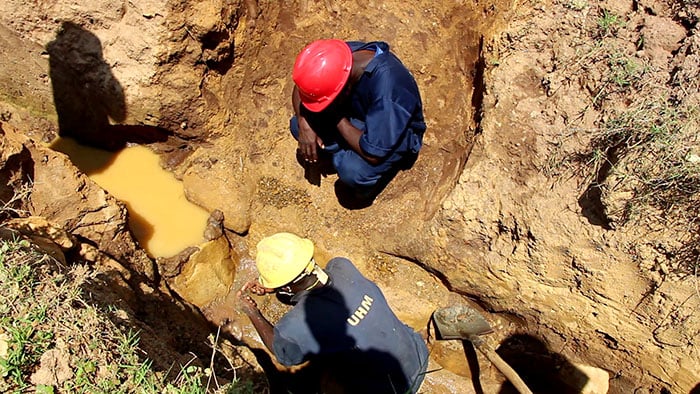
Umuyobozi w’Akarere ka Muhanga Kayitare Jacqueline, avuga ko nyuma y’uko ikirombe gicukurwamo amabuye y’agaciro cya Kompanyi yitwa (Etablissement Karinda) kigwiriye abakozi bacyo babiri ba nyiracyo bagerageje kubikuriramo batamenyesheje inzego z’ubuyobozi.
Kayitare avuga ko iyo Kompanyi yari yarahagaritwe by’agateganyo kubera ko itujuje ibisabwa, ari na yo mpamvu yaba yatumye abantu bahera mu kirombe cyayo amakuru agahishwa kugeza bukeye ari na bwo inzego z’ubuyobozi zatabaye zigafasha abaturage gukomeza gukora ubutabazi abantu bagakurwamo.
Agira ati “Kompanyi n’ubundi yari yaragaragayeho imikorere mibi, amakuru bayaduhishe kuko iyo kompanyi yari yarenze ku mategeko igakora mu buryo butemewe kuko bari barahawe igihano cyo kudakora ukwezi kose, ndatekereza ko ari yo mpamvu bari baduhishe, babitubwiye mu gitondo”.
Umuyobozi w’Akarere ka Muhanga asaba abaturage kutishora mu bucukuzi bw’amabuye y’agaciro butemewe, kuko ari ho hava impanuka zirimo n’imfu za hato na hato, kuko hari hashize iminsi mike mu Murenge wa Muhanga ikirombe kigwiriye abantu batanu bagapfa.
Mu Murenge wa Kabacuzi na ho ikirombe kimaze imyaka ibiri kigwiriye abantu babiri bikaba byarananiranye kubakuramo kugeza n’uyu munsi.
Ku bijyanye no kuba gufunga ibirombe biri mu bitera kwishora mu bucukuzi butemewe, Kayitare avuga ko uko byamera kose abaturage bagomba gukorana na Kompanyi zujuje ibisabwa, kuko amabuye y’agaciro ari umutungo ukwiye kuba ubagirira akamaro aho kubatwara ubuzima.
Agira at, “Amabuye y’agaciro ni umutungo kamere ukwiye kuba utubyarira ubukungu aho kudutwara ubuzima, bugomba gukorwa neza rero, abujuje ibisabwa akaba ari bo babukora kinyamwuga batagira ibyo bangiza”.
Yongeraho ati “Ibya ngombwa bizatangwa kandi bihabwe abujuje ibisabwa, ubucukuzi bukorwe kinyamwuga kandi n’ubuzima bw’abaturage bacu bukomeze kurengerwa, turi gukorana na (RMB) kugira ngo abasabye hagenzurwe niba bujuje ibisabwa bahabwe ibya ngombwa abaturage bacu bagomba kuba bihanganye”.
Kompanyi 11 ni zo zifite uburenganzira bwo gucukura amabuye y’agaciro mu mirenge 11 icukurwamo amabuye y’agaciro mu karere kose.
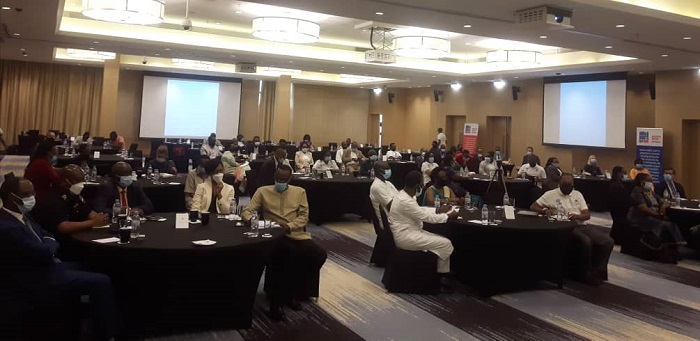
NCHR yeretse inzego zimwe na zimwe uko zitwaye muri iki gihe cya Covid-19
Itegeko Nshinga rya Repubulika y’u Rwanda, ingingo yaryo ya 26 ivuga ko buri Munyarwanda afite uburenganzira bwo kujya aho ashaka hose no gutura aho ari ho hose mu Rwanda, ndetse no kuva mu gihugu hamwe no kukigarukamo uko abishatse.
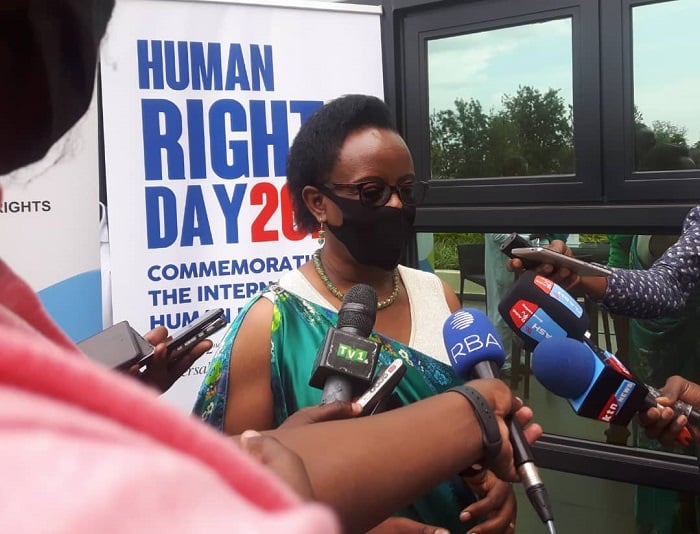
Perezida w’iyi Komisiyo, Marie Claire Mukasine, yagize ati “Birumvikana ko hari uburenganzira bwagiye bugabanuka, niba umuntu yemerewe kujya aho ashaka, gukora imirimo inyuranye, ibyo byose byabaye bisubitswe…kandi ibyemezo nk’ibyo na byo biteganywa n’amategeko”.
Perezida wa Komisiyo y’Uburenganzira bwa muntu, Marie Claire Mukasine
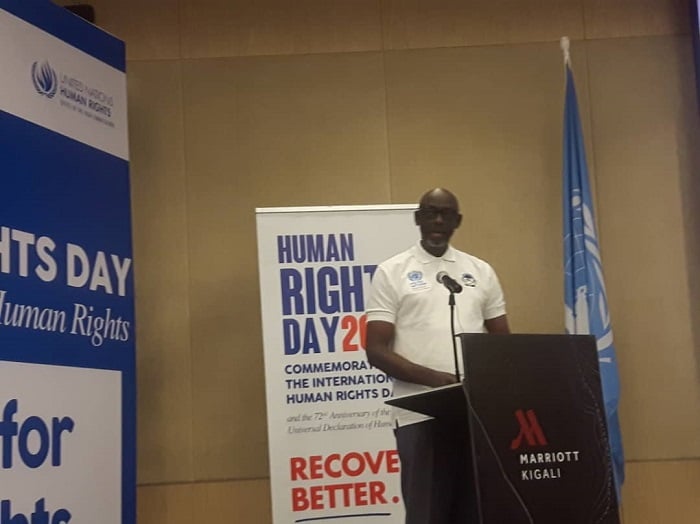
Minisitiri w’Ubutabera akaba n’Intumwa Nkuru ya Leta, Johnston Busingye, akomeza ashimangira ko ibyakozwe mu kubuza abaturage kwandura Covid-19 byemewe n’amategeko, kandi ko Leta izakomeza kubikora mu gihe nta rukingo n’umuti biraboneka kugeza ubu byo kurwanya iyi ndwara.
Minisitiri Busingye yagize ati “Ni ukureba urugero twageraho twemerera abaturage kubona uburenganzira busesuye, hamwe n’urwo twageraho tubabuza mu rwego rwo kurengera ubuzima bw’Abanyarwanda benshi bashoboka, kabone n’ubwo bajya kurega ku Rwego rw’Umuvunyi ariko bagende ari bazima”.
Mu bitemewe n’amategeko NCHR ivuga ko byakozwe na bamwe mu bakorera inzego za Leta, hari aho abapolisi, abayobozi mu nzego z’ibanze n’abasirikire bahohoteye abaturage bikanaviramo bamwe impfu.
Komisiyo y’Uburenganzira bwa Muntu ivuga ko hari abantu bane bishwe, ariko igashima ko abakoze ibyo byaha bakurikiranywe mu mategeko bakabihanirwa.
Iyi komisiyo yakomeje igaragaza ko uburenganzira ku butabera butatanzwe neza kubera Covid-19, aho mu mwaka wa 2018/2019 inkiko zari zifite imanza z’ibirarane 13, 010 ariko zikaza kwiyongera kugera kuri 25, 356 muri 2019/2020.
Minisitiri w’Ubutabera akaba n’Intumwa Nkuru ya Leta, Johnston Busingye avuga ko Leta izakomeza kurinda abaturage bayo kabone n’ubwo hari aho bibabuza uburenganzira
NCHR irashima ariko ko hari abantu 2,855 bari bafungiwe muri kasho barekuwe ku bwo kwirinda Covid-19, kandi ko Polisi itakumiriye abanyamakuru ahubwo yaborohereje kubona inkuru bakeneye.
NCHR kandi irashima ibyumba by’amashuri 22,500 birimo kubakwa hamwe n’uburezi bwatanzwe hifashishijwe ikoranabuhanga, n’ubwo abana bo mu cyaro benshi ngo batigeze bakurikirana ayo masomo, ndetse ko hari n’abaretse ishuri bagatwara inda.
Ku bijyanye n’uburenganzira ku murimo, ubushomeri ngo bwageze ku rugero rwa 22.1% muri Gicurasi 2020 ariko bwongera kumanuka kugera kuri 16% muri Kanama 2020, ndetse kugeza ubu imirimo imaze kuboneka ngo iraruta ubwinshi iyari isanzweho mbere ya Covid-19 nk’uko bitangazwa na Minisiteri y’Imari n’Igenamigambi (MINECOFIN).
NCHR isaba inzego zishinzwe gushyiraho amategeko gutangira gutekereza ku itegeko rirengera abantu mu gihe hateye icyorezo nk’iki cya Covid-19.
Umuhuzabikorwa w’Umuryango w’Abibumbye mu Rwanda, Fodé Ndiaye, avuga ko Covid-19 ishobora kuba atari cyo cyago cya nyuma isi ihuye na cyo, ariko ko buri gihe igihugu kiba kigomba gufata ingamba zirengera abantu bose cyane cyane ab’amikoro make n’abafite intege nke z’umubiri.
Umuryango umwe w'i Kanuni, mu gihugu cya Kenya ubwo wari mu myiteguro yo gushyingura , abari aho batunguwe no kubona uwo bashyingura arimo gutembera mu baje mu kiriyo cye.
Ku wa kane, tariki ya 3 Ukuboza 2020, Osca Mithika ufite imyaka 23 y'amavuko nibwo yagarutse mu rugo iwabo asanga imyiteguro yo kumushyingura irarimbanyije atungurwa n'uko bari bazi ko yamaze gupfa ndetse n'umurambo we bawufite.
Nyina wa Mithika, Regina Choa, yavuze ko byasabye ubutwari bwinshi kugira ngo yegere umuhungu we nyuma yuko abantu bose bagize ubwoba bagahita baburirwa irengero bakimara kumubona asubiye mu rugo.
Yavuze ko umuryango ndetse na bene wabo bemeraga badashidikanya ko yarohamye mu mazi mu byumweru bibiri byari bishize.
Ikinyamakuru Kenyans dukesha iyi nkuru  gitangaza ko Choa yakomeje avuga ko kwegera umuhungu we nawe byamuteye ubwoba.
Ati:'Nahindaga umushyitsi uko narushagaho kumwegera kugira ngo ndebe ko ari muzima kuko twatekerezaga ko twakuye umurambo we mu ruzi rwa Urra.'
Atanga ubuhamya bw'iki kibazo, uwo bari bazi ko ari nyakwigendera Mithika,ubwe yavuze ko yavuye mu rugo ajya kwishakira akazi gasanzwe i Mutuati mu majyaruguru ya Igembe bityo ko atigeze apfa nkuko umuryango we wabitekerezaga.
Mithika akimara kuburirwa irengero umuryango we wabimenyesheje polisi itangira gushakisha.Nyuma uyu muryango wahamagawe ku buruhukiro bw'ibitaro bya Nyambene kugirango barebe neza ko umurambo wavumbuwe mu ruzi rwa Urra  ari uw'umuntu wabo. Uyu muryango bivugwa ko wahageze ukibonera neza ko umurambo ari uwa Mithika.
Umuyobozi w'akarere Japhet Kaindiria yemeje ko ngo uyu muryango wari umaze gukoresha amashilingi ya Kenya ibihumbi 16 mu myiteguro yo gushyingura umuntu wabo, mu gihe we yarimo yidegembya mu gihugu ari muzima.
This year’s Umushyikirano will be attended by 500 participants at Kigali Convention Center instead of 2000 who have been attending since inception.
To control the spread of COVID-19 all participants will be tested and respect other health guidelines instituted including hand washing, wearing face masks and social distancing.
Among other changes, this year’s Umushyikirano will last one day on 16th December instead of the usual two days.
It will bring together Rwandans from inside the country and abroad while others will follow activities virtually at different meeting points.
There will be four established centers across in the countryside thus; Karongi, Nyaruguru, Kirehe and Gicumbi, and one at Intare Arena convening 500 participants of YouthConnect summit.
During the council, the president will deliver 'State of the Nation’ address.
The address is expected to give hope to Rwandans especially during the period when the country’s economy has been shaken by Coronavirus pandemic.
There have been several reshuffles in top Government officials following the previous Umushyikirano. Some institutions got new heads while others have been suspended or appointed to new duties.
Umushyikirano is Kinyarwanda’s equivalent of 'dialogue’. During the dialogue, participants exchange ideas, share experiences, peer review and question each other. Today Umushyikirano is known as the National Dialogue Council.
As part of efforts to reconstruct Rwanda and nurture a shared national identity, the Government of Rwanda drew on aspects of Rwandan culture and traditional practices to enrich and adapt its development programs to the country’s needs and context.
The result is a set of Home Grown Solutions â” culturally owned practices translated into sustainable development programs. One of these Home Grown Solutions is Umushyikirano.
Governed by the Rwandan Constitution (Article 168), Umushyikirano is a forum where participants debate issues relating to the state of the nation, the state of local government and national unity. The Office of the Prime Minister is responsible for the overall co-ordination of Umushyikirano.
Umushyikirano is an annual event chaired by the President of Rwanda that gives Rwandans from all walks of life the opportunity to ask questions directly to their leaders. The event is attended by members of the Cabinet and Parliament, representatives of the Rwandan community abroad, local government, media, the diplomatic community and others invited by the President.
Those unable to attend in person at Rwanda’s parliament building can participate via telephone, SMS, Twitter and Facebook as well as follow the debate live on television and radio.
The first National Dialogue Council took place on 28 June 2003 and has been held each year since.
Umushyikirano aims to be a leading example of participatory and inclusive governance. It is hoped that by directly engaging with their leaders, Rwandans feel part of the decision making that affects their lives. Umushyikirano also serves as a forum for Rwandans to hold their leaders and government to account.
Once a participant has asked a question, either in person, via Twitter, Facebook, SMS, the web or phone, the leader responsible for that area responds. All questions asked are recorded.
Senior Government officials attending last year’s Umushyikirano.
The statement released last night shows that new cases were found in Kigali: 24, Rubavu: 15, Huye: 14, Rusizi: 8, Kayonza: 3, Gicumbi: 3, Muhanga: 1, Gisagara: 1, Kamonyi: 1 and Nyagatare: 1.
Rwanda confirmed the first COVID-19 patient on 14th March 2020.
Since then, 6349 people have been infected out of 657 995 sample tests of whom 5789 have recovered, 507 are active cases while 53 have succumbed to the virus.
Coronavirus symptoms include coughing, flu, and difficulty in breathing. The virus is said to be transmitted through the mucous membranes of the respiratory tract.
Rwandans are urged to adhere to COVID-19 health guidelines, washing hands frequently using soaps and safe water, wearing face masks and respecting social distancing.
Umwe mu banyeshuri bahuye n’icyo kibazo ni Ally Radjabu Musema wigaga muri Christian University of Rwand, ubu akaba ari muri University of Kigali. Avuga ko yasabwe gusubiramo amasomo yari yarize kuko atahawe indangamanota y’aho yigaga.
Ati “Nk’ubu hari abanyeshuri bari bageze mu wa kabiri none aho bagiye kwiga basubijwe mu wa mbere na ho abari mu wa gatatu bagarurwa mu wa kabiri mu gihe bumvaga bagiye kurangiza kwiga, birabangamye. Kugeza ubu hari abanyeshuri bakijya kwiga ariko hari n’abandi byananiye kuko batarabona amanota yabo”.
Yongeraho ko kugeza ubu nk’abo biganaga mu ishami ry’icungamutungo bagera ku 100 nta n’umwe wabonye amanota ye yose, bivuze ko ari ikibazo rusange ku banyeshuri bize muri Christian Unuversity.
Mu minsi ishize ni bwo hari kaminuza zafunzwe kubera ibibazo bitandukanye bijyanye n’imicungire yazo, zirimo UNIK yabaga mu Karere ka Ngoma yari imenyerewe nka INATEK, hari Christian University of Rwanda yari mu Mujyi wa Kigali, Indangaburezi College of Education (ICE) yari mu Karere ka Ruhango na KIM iherutse gufunga imiryango kubera ikibazo cy’amikoro.
Mu kwezi gushize ni bwo ikibazo cy’abanyeshuri bavuye muri kaminuza zafunzwe cy’uko babuze amanota yabo cyasakujwe ari byo byatumye kwiga kwabo bigorana.
Kuri icyo kibazo, Minisitiri w’Uburezi Dr Valentine Uwamariya, yavuze ko nta gisubizo gifatika gihari kuko hari zimwe muri izo kaminuza zahise zihura n’ibibazo bikomeye.
Ati “Nta gisubizo kiboneye dufite ku banyeshuri batakaje amanota yabo, cyane ko natwe tutabona aho duhera, ni ikibazo gikomeye. Hari abanyeshuri bibaza niba atari ubuyobozi bwa kamunuza bwabimye amanota yabo, ntabwo ari byo ahubwo barayatanze”.
Ati “Ikindi kibazo ni uko na bamwe mu bagombye gukemura icyo kibazo bafunze. Gusa turimo gukorana n’Inama nkuru ishinzwe uburezi (HEC), kugira ngo turebe uko cyakemuka. Gusa ntabwo byoroshye kuko hari abanyeshuri bavuga ko barangije amasomo ariko nta cyangombwa na kimwe kibyerekana”.
Zimwe muri kaminuza zakiriye abo banyeshuri ariko zikabasaba gusubira inyuma y’umwaka bigagamo ni kaminuza ya Kigali (UK), Kaminuza yigenga ya Kigali (ULK), Kaminuza y’Abadivantisiti b’umunsi wa karindwi muri Afurika yo Hagati (AUCA) na Mount Kenya University.
Abo banyeshuri kugeza ubu bari mu gihirahiro, bagasaba abo bireba ko babafasha kugira ngo ibibazo byabo.
By Zohra Yermeche, Program Director for Connect To Learn at Ericsson
The COVID-19 crisis, and the impact which it has had on learning across the world, has highlighted many of the digital disparities which exist in today's world. At a time when many of the world's students shifted from physical to digital, we were also faced with the hard truth that today there are still 3.6 billion people in the world who are unconnected.
For students in the connected half of the world, the story is much different. While 1.2 billion children were affected by school closures across much of the world, our recent Consumer COVID-19 report found that students were able to substitute physical learning by spending 230 percent more time on digital learning tools such as Google Class, Epic! and Seesaw Class.
This of course is a significant rise, but it is also an acceleration of a trend which we have steadily been tracking since our first Connect To Learn program exactly ten years ago.
The State of Broadband 2020 report estimates that there are twice as many people today who use the Internet compared to 2010. This rise in digital literacy, together with the imminent period of rapid digitalization of the economy, means that ensuring fair and equal access to both education and future job markets will rest on the extent of digital inclusion within our societies.
What is digital inclusion and why is it so important today?
Today, technology plays a much bigger role in the quality and scope of how we learn, such as new digital learning platforms which are estimated to reach 350 billion USD by 2025; what we learn, with a growing emphasis on programming, robotics, AI and automation; and how we can use it in the job market, with digital skillsets increasingly becoming a prerequisite of tomorrow's workforce.
The changes which are happening today show the disparity between the developed and undeveloped world. If you are not connected, that shows you the leap which you have to make between the connectivity aspect, access to education and benefits which are derived from that.
Closing this digital divide, with those who are not connected or not considered to be digitally literate, is imperative to ensuring a fair distribution of digital opportunities across countries, locations, gender, socioeconomic status, and age.
Impact of digital inclusion on GDP and the job market
Ten years ago, geopolitical discussions largely focused on competence development for teachers, with little priority given to digital policy beyond essential connectivity requirements.
Today, the policy landscape is beginning to look very different and the emergence of the digital economy is driving this change. For example, when we look at digital inclusion in the context of the job market, it is predicted that the 5G digital economy alone will create 22.3 million jobs worldwide in the coming decade. This has repercussions on GDP too, as having a workforce that is not digitally skilled is of course not compatible with a digitized economy.
As such, we already see today how governments are prioritizing digital inclusion in their policy agendas, notably at this year's G20 summit. There seems to be more emphasis and regulation to support digital education, and the impact that has on an awakening of the rest of the economy.
While governments first priority in digitalizing their societies is on setting up the tools, providing connectivity to enable tomorrow's digital services, it's also important that people know how to use them and how to use them responsibly. Digital literacy and capacity building are some key elements that governments and private enterprises should continue to work on in the next few years. These efforts must be well coordinated, scaled up and based on evidence-based policymaking, as laid out in the UN Roadmap for Digital Cooperation (page 8).
Access to education in the digital age
In 2010, we co-founded the Connect To Learn initiative with the Earth Institute at Columbia University and Millennium Promise, with a focus on delivering connectivity and ICT tools to enhance teaching and learning in unconnected, underprivileged and largely unrepresented communities.
Since our first projects in the Millennium Villages, we've helped to connect and increase the digital inclusion of more than 200,000 students worldwide. As the program has evolved, we have increased our efforts to close the digital divide not just in terms of connectivity, but from a content, syllabus and platform side which is fundamental.
As a technology company, we quickly discovered that we can offer so much more than connectivity, but furthermore can help improve learning processes and methodologies so learning can become more impactful. For example, through partnerships with like-minded organizations, we have helped to digitalize and disseminate content through digital learning tools such as mobile apps.
One of the biggest differences from ten years ago is also that the nature of technology in an educational context, both as a medium and a means to enter the job market was still relatively immature as the landscape has evolved, we've come to understand the need to personalize and individualize learning so that we can improve learning outcomes in a meaningful way.
Giving people access to the right type of content is one aspect, another equally critical aspect is the human element. On top of the digital layer, students will still always need the engagement, inspiration and activation that comes from teachers and trainers who know about the topic. I believe that, even in the digital age, technology will never be able to replace this interaction, but rather can serve as an increasingly innovative medium for those critical learner-instructor interactions, such as through the Internet of Skills.
Digital inclusion through public-private partnerships
Today, there is a significant need for digital skills courses. Key technology areas such as AI, robotics and app development are advancing at such a rapid pace, which can make it difficult to ensure an effective transfer of competence to emerging workforces.
Such is the pace of change for topics such as these, public academic institutions will invariably struggle to take learning beyond a basic theoretical level. Public-private partnerships will therefore be key to addressing this, by developing advanced curriculums and delivering the necessary quality and scale of access.
As a sustainability pioneer in the private sector, we've understood the power of partnership, which is why we're investing heavily in building out those partnerships with like-minded entities to create sustainable solutions in order to address the issues which the education sector faces today. A good example of this is the Ericsson Digital Lab program which is now live in several countries in partnership with local schools and community learning centers. The aim here is to share those competences that we have in-house on a much broader scale, addressing those critical skillset demands which are needed in tomorrow's workforce.
This year, in response to the impact which COVID-19 has had on learning, we continuing these efforts by joining the UNESCO-led Global Education Coalition, launching Ericsson Educate and partnering with UNICEF to map school connectivity as part of the Giga project.
Through digital methodologies, and with a focus on improving digital skills for students across all communities, our commitment is to ensure that future generations continue to have the skills and knowledge to find opportunity in a changing digital world. This was what we set out to do when we launched Connect To Learn ten years ago, and this will continue to be our priority in this next critical decade of action. Â
Learn more
In 2020, Ericsson's Connect to Learn program celebrates ten years of bridging the global digital divide. To find out more about our various programs, visit our Connect To Learn page.
Kigaliâ”On December 9, 2020, the USAID-funded Rwanda Duteze Imbere Ubutabera (DIU) Activity had its final event. This event serves as an opportunity for members of Rwanda's justice sector (JRLOS), stakeholders and development partners to learn about the activity's impact over the last three years and to share recommendations for continued progress in accessing justice.
DIU spanned three-years from February 2018 to January 2021 and aims to increase access to justice and enhance the rule of law in Rwanda through improving judicial effectiveness in both formal court mechanisms and community justice (Abunzi); and improving public understanding of judicial system processes and legal rights.
The virtual event was graced by Hon. Johnston Busingye, Mr. Mr. Dennis WESNER, the Director, Office of Democracy, and Good Governance/ USAID among others and comprise presentations by key stakeholders and beneficiaries that have engaged with the program.
DIU supported the efforts to improve judicial effectiveness in both formal court mechanisms and community justice (Abunzi); and improved public understanding of judicial system processes and legal rights.
For the past 3 years, has built the capacity of more than 6,500 justice sector actors, including 2,836 mediators (Abunzi) and 507 Judges, Court registrars and other judicial personnel, while more than 7,500 individuals were provided with legal aid services.
Through DIU's support to community-prisoner reconciliation and reintegration, more than 10,000 people, including 1,946 prisoners were reached. Through DIU support 550 prisoners were able to voluntarily seek forgiveness from and reconcile with their victims and/or their families.
The project covered a range of technical assistance increasing access to justice including gender equality and social inclusion, monitoring, evaluation, and learning and public awareness activities, including a weekly radio program conducted on five radio stations and community dialogues at the grassroots level, that an estimated 1,334,906 people throughout the entire project life span.
'I personally express my satisfaction for what the Duteze Imbere Ubutabera has achieved so far in terms of legal aid service provision and capacity building of justice sector members. Capacity to Justice Actors and more importantly to justice sector members is critical in enabling justice sector institutions to effectively deliver on their mandates as well as improve the service delivery to Rwandans.' Hon. Johnston Busingye said
The statement released last night shows that the deceased are parents respectively aged 60 and 56.
Among others, 41 people have been infected out of 3654 sample tests while no recovery case recorded.
Rwanda confirmed the first Coronavirus patient on 14th March 2020.
So far , 6278 cases have been found out of 654,322 sample tests of whom 5715 have recovered , 510 are active cases while the death toll stands is 53.
Coronavirus symptoms include coughing, flu, and difficulty in breathing. The virus is said to be transmitted through the mucous membranes of the respiratory tract.
Rwandans are urged to adhere to COVID-19 health guidelines, washing hands frequently using soaps and safe water, wearing face masks and respecting social distancing.
Perezida Nana Akufo-Addo wa Ghana yatorewe indi manda nyuma y'amatora yo kuri uyu wa Mbere tariki ya 07 Ukuboza 2020, yabayemo guhatana gukomeye.
Bwana Akufo-Addo yabonye amajwi 51.6% naho uwo bari bahatanye cyane John Mahama, wahoze ari Perezida, abona amajwi 47.4%, nkuko akanama k'amatora kabitangaje.
Bwana Mahama ntabwo aremera ko yatsinzwe. Iyo yari inshuro ya gatatu aba banyapolitike babiri bahatanye mu matora ya perezida.
Ghana izwiho kuba ari kimwe mu bihugu by'Afurika birangwamo demokarasi yashinze imizi.
Ibyavuye mu matora y'abagize inteko ishingamategeko ntabwo biratangazwa, ariko biteganyijwe ko bitangazwa vuba aha.
Ubwo hatangazwaga ko Bwana Akufo-Addo yatsindiye manda ya kabiri, abamushyigikiye bishimiye intsinzi bikomeye, nkuko bivugwa n'umunyamakuru wa BBC Thomas Naadi uri mu murwa mukuru Accra dukesha iyi nkuru.
Mbere yaho ku wa gatatu, polisi yavuze ko kuva ku wa mbere habayeho ibikorwa 21 by'urugomo rufitanye isano n'amatora, byahitanye ubuzima bw'abantu batanu.
Aya ni amatora ya perezida ya munani abayeho muri Ghana kuva itegekonshinga ry'iki gihugu ryavugururwa mu mwaka wa 1992.
John Mahama wabaye Perezida wa Ghana kugeza mu 2016, yatsinzwe bwa kabiri na Bwana Akufo-Addo
Bwana Mahama yabaye Perezida wa Ghana imyaka ine, asimburwa na Perezida Akufo-Addo mu mwaka wa 2017. Inshuro zose Bwana Akufo-Addo yamutsinze, yagiye amutsinda bigoranye.
Kubera amabwiriza yo kwirinda coronavirus, kwitabiri mitingi ku bwinshi byari bisanzweho byarasubitswe.
Ahubwo, igihe kinini cyo kwiyamamaza amashyaka New Patriotic Party (NPP) rya Perezida Akufo-Addo na National Democratic Congress (NDC) rya Bwana Mahama, yakimaze ahatanira ku mbuga nkoranyambaga no kuri radio na televiziyo.
Ariko, mu minsi ya nyuma yo kwiyamamaza, kwigengesera byarirengagijwe ubwo abanyapolitike bahuraga n'imbaga y'ababashyigikiye. None ubu hari impungenge ko ubwandu bwa coronavirus bwaba bugiye kwiyongera.
Muri Ghana abanduye Covid-19 barenga 52,000, muri bo abarenga 300 yarabishe, nkuko imibare ya Kaminuza ya Johns Hopkins yo muri Amerika ibigaragaza.
Nana Akufo-Addo yageze ku butegetsi mu mwaka wa 2017




 82
82

